


Orange | Red Crocosmia

 Garden The PlantShare Way ®
~ All About Golden montbretia ~

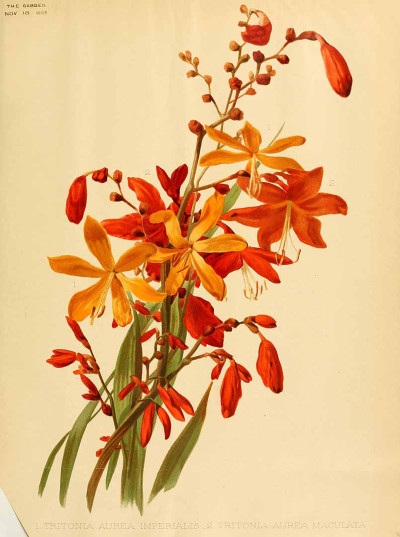
Learning Crocosmia (Crocosmia aurea) care is a great starting point for beginner gardeners because this plant rewards even simple attention with bold summer color. To grow it successfully, begin by choosing the right spot. Warm, bright locations with well-draining soil create ideal growing conditions, especially if you garden in an area that matches the recommended Crocosmia hardiness/growing zones (generally Zones 5–9).
There are many varieties of Crocosmia to explore, from vivid orange types to softer yellow forms. Each variety brings slightly different heights and bloom times, but they all share the same basic needs. Although Crocosmia spreads by corms, it rarely becomes truly invasive when planted in well-managed beds. Still, regular dividing keeps clumps healthy and prevents overcrowding.
A good companion plant with similar requirements is Gladiolus callianthus, often called the peacock orchid. Like Crocosmia aurea, it grows from corms and prefers full sun and well-draining soil. However, Gladiolus callianthus blooms later in the season, producing elegant white flowers with deep purple centers, making it an excellent choice for extending color into late summer and early autumn.
If you want to expand your planting, try its propagation through dividing mature corms in early spring. Choose strong, firm offshoots and replant them at the same depth for even growth. When your plants outgrow their space or you want to relocate them, focus on careful transplanting. Lift the clump with a garden fork to avoid damage, separate the corms, and replant them quickly so they don’t dry out.
Maintaining right Crocosmia care means watering consistently during active growth and adding a layer of compost each spring. Avoid soggy soil, since excess moisture can weaken the corms. Once established, Crocosmia tolerates short dry periods but still performs best with steady moisture during the blooming season.
With the right growing conditions and a little attention each year, this plant will return reliably and produce vibrant flower spikes that stand out in any sunny garden.
Choose a sunny spot with loose, well-draining soil. Set the corms in small groups for a fuller look. Place each corm with the pointed end facing up, cover with soil, and water well.
Crocosmia aurea usually blooms in midsummer. In warm climates, it may start a little earlier, but most plants show their flowers from July through August.
Yes. Crocosmia aurea is a perennial that grows back every year when planted in the proper climate. It survives winter by storing energy in its underground corms.
Crocosmia aurea is generally deer resistant. Deer usually ignore its tough leaves and bright flowers, making it a safe choice for gardens with wildlife pressure.
Plant Crocosmia corms about 3–4 inches (7–10 cm) deep. Space them 6–8 inches apart so they have room to spread without overcrowding.
Divide Crocosmia in early spring before new growth starts. You can also divide it in fall after the foliage dies back. Both times allow the plant to settle before the next growing season.
Crocosmia is not known to be toxic to dogs. Even so, try to keep pets from chewing garden plants to avoid stomach upset.
Most Crocosmia varieties reach 2–4 feet tall. Dwarf types stay shorter, while larger forms can grow close to chest height.
The easiest method is dividing clumps of corms. Lift the plant, separate the smaller corms from the main one, and replant them. They root quickly and grow into new flowering plants.
Last updated on Jun 03, 2026
Species suggested by: Dina Russell, 2020
Plant Profile compiled and written by: Team PlantShare
Contributors: Team PlantShare
 Ask Us!

