


White Christmas

 Garden The PlantShare Way ®

~ All About Poinsettia ~


Poinsettias (Euphorbia pulcherrima) bring bold color and warmth to winter spaces, but many gardeners don’t realize how easy they are to grow outside the holiday season. To keep your plant thriving year-round, you need to understand plant care and the conditions that support strong growth.
Start by learning the poinsettia hardiness zone range. They grow as perennials only in zones 9–11, where temperatures stay warm throughout the year. In cooler regions, gardeners keep them indoors or move them outside during summer once nighttime temperatures stay above 60°F. This approach helps the plant grow fuller branches and brighter bracts later in the season.
Good Euphorbia pulcherrima care begins with choosing the right spot. Poinsettias prefer bright, indirect light and soil that drains well but holds some moisture. Water when the top inch of soil feels dry and let extra water drain away completely. Avoid soggy soil because it leads to root problems and weak growth. A monthly dose of balanced fertilizer during spring and summer keeps the plant strong as it develops new leaves.
If you want more poinsettias for your home or garden, try propagation. The easiest method is taking stem cuttings in late spring or early summer. Choose healthy new growth, remove lower leaves, and place the cutting into moist, lightweight potting mix. Warm temperatures and consistent moisture help the cutting form roots within a few weeks. Once it begins growing new leaves, you can move the plant into brighter light.
As a companion plant, Euphorbia milii pairs well with poinsettias, especially in bright indoor spaces or warm outdoor patios. This spiny, succulent-like Euphorbia thrives in similar light conditions and prefers well-draining soil with infrequent watering. While poinsettias provide bold, leafy color, Euphorbia milii adds texture and long-lasting blooms throughout much of the year. Together, they create visual contrast and a cohesive display, as both plants enjoy warmth, bright light, and careful watering.
With the right care, poinsettias stay vibrant and attractive far beyond the holiday season. When you understand their needs: light, warmth, and proper watering, you’ll enjoy colorful bracts and healthy foliage year after year, especially when paired with compatible companions like Euphorbia milii.
Coming soon!
The Poinsettia comes from Mexico and parts of Central America. It grows naturally in warm, tropical areas and was used long ago by Indigenous peoples for decoration and dye.
In homes, Poinsettias usually grow 1 to 3 feet tall. In warm outdoor climates, they can grow much larger and reach 8 to 10 feet, forming a tall, bushy shape.
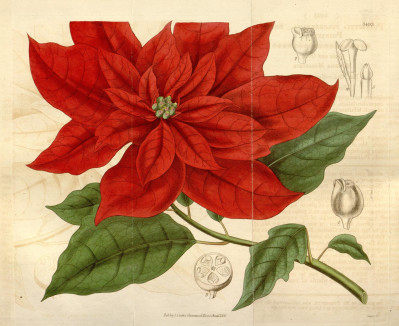
Not exactly. What people think are “flowers” are actually colored leaves called bracts. The real flowers are the tiny yellow parts in the center.
The red Christmas flowers most people know are called poinsettias. Their bright red bracts make them a popular decoration during the holiday season.
The number of leaves varies a lot based on the plant’s size and how it was grown. A small potted Poinsettia may have 20–40 leaves and bracts, while a large outdoor plant can have many more.
Last updated on Jul 15, 2026
Species suggested by: Dina Russell, 2023
Plant Profile compiled and written by: Team PlantShare
Contributors: Team PlantShare
 Ask Us!