


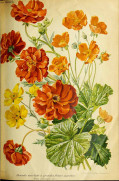
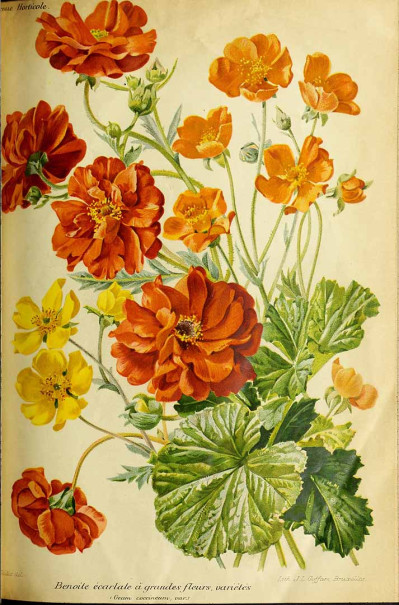
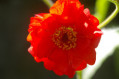
Red Geum

 Garden The PlantShare Way ®
~ All About Chilean avens ~

If you want reliable color in your garden from late spring into summer, Geum quellyon deserves your attention. This hardy perennial produces bright, cup-shaped flowers in shades of red, orange, and yellow. It grows in tidy clumps and reaches about 12 to 24 inches tall, which makes it ideal for borders, cottage gardens, and mixed perennial beds.
Geum quellyon thrives in full sun to partial shade and prefers well-drained, fertile soil. Before planting, loosen the soil and mix in compost to improve drainage and nutrient content. Water young plants regularly until they establish strong roots. Once mature, they tolerate short dry periods, but consistent moisture encourages better blooming. Deadhead spent flowers to extend the bloom season and keep the plant looking fresh.
You can divide Geum quellyon every two to three years in early spring or fall. Division keeps the plant vigorous and prevents overcrowding. Simply lift the clump, separate healthy sections with roots attached, and replant them at the same depth.
For a dynamic and beneficial planting combination, pair Geum quellyon with Echinacea purpurea. This popular native perennial, often called purple coneflower, produces large daisy-like blooms with raised centers. While Geum quellyon offers warm-toned flowers in late spring, Echinacea purpurea continues the show through summer. Together, they create a layered look with contrasting flower shapes and complementary colors.
This pairing also supports pollinators. Bees and butterflies visit both plants regularly, which strengthens your garden’s ecosystem. Plant them in groups of three or five for a natural, cohesive design. Place Geum quellyon toward the front of the border and Echinacea purpurea slightly behind it to showcase both plants clearly.
With proper care and thoughtful placement, Geum quellyon adds long-lasting beauty and dependable performance to any beginner’s garden.
A Geum plant is a perennial flower that belongs to the rose family. It is known for its bright blooms in shades of yellow, orange, and red. Geums are compact, easy to grow, and often used in borders, cottage gardens, or mixed beds.
Geum quellyon grows best in fertile, well-drained soil that holds some moisture. A loamy mix enriched with compost is ideal. Avoid heavy clay or waterlogged soil, as that can damage the roots.
Yes, Geum plants are generally considered safe around pets and children. Unlike some ornamentals, they are not known to be toxic if touched or accidentally ingested. Still, it’s always best to prevent kids or animals from chewing on garden plants.
A Geum is a perennial, which means it can live for several years in the garden. With good care - regular watering, proper soil, and deadheading - it can thrive for three to five years or even longer. Over time, clumps may weaken, so dividing and replanting every few years helps keep the plant healthy and blooming.
Last updated on May 31, 2026
Species suggested by: Dina Russell, 2020
Plant Profile compiled and written by: Team PlantShare
Contributors: Team PlantShare
 Ask Us!

