


White Hesperantha

 Garden The PlantShare Way ®
~ All About Scarlet river lily ~


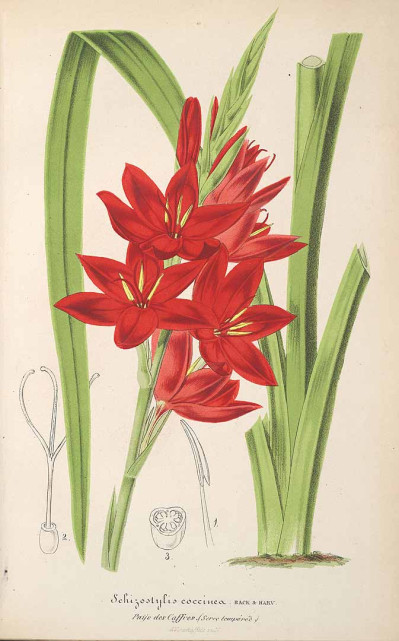
If you want late-season color in your garden, Hesperantha coccinea, commonly known as the Crimson Flag Lily or River Lily, is an excellent choice. This South African perennial adds vibrant splashes of red, pink, or white to gardens when most plants are fading. Its star-shaped blooms and slender green leaves make it a standout in borders, near ponds, or in containers.
Growing Hesperantha coccinea is simple with the right conditions. It thrives in moist, fertile soil and appreciates full sun, though it can tolerate partial shade. The key to success is consistent moisture, especially during the growing and flowering season. This makes it perfect for damp spots or areas close to water features. In drier gardens, regular watering helps maintain lush growth and abundant blooms.
For best results, plant the bulbs or rhizomes in spring. Space them about 8–10 inches apart, and enrich the soil with compost to boost fertility. Once established, Hesperantha coccinea forms upright clumps of foliage reaching 18–24 inches tall. From late summer into fall, it produces colorful flowers that attract bees and butterflies, extending interest well beyond the peak summer season.
As a companion plant, Galium odoratum pairs beautifully with Hesperantha in partially shaded or moisture-retentive areas. Commonly known as sweet woodruff, this low-growing perennial forms a dense mat of whorled green leaves and produces delicate white star-shaped flowers in spring. While Hesperantha provides bold, upright blooms later in the season, Galium odoratum offers earlier floral interest and attractive ground cover that helps suppress weeds and retain soil moisture. Its preference for moist, humus-rich soil complements the growing needs of Hesperantha, creating a layered planting with texture at ground level and vibrant color above.
In colder regions, mulch Hesperantha coccinea heavily in winter or lift and store the rhizomes to protect them from frost. Dividing clumps every few years in spring keeps plants vigorous and flowering well. With thoughtful placement and simple care, this combination delivers long-lasting color, texture, and movement when the garden needs it most.
Hesperantha coccinea loves moisture and needs regular watering during its active growth and blooming period. Keep the soil evenly damp, especially in warm or dry weather. It thrives best in soil that never fully dries out, making it ideal for spots near ponds or in naturally wet areas. Avoid letting the roots sit in stagnant water for long periods, but don’t allow the soil to dry between waterings either.
You can divide Hesperantha coccinea every two to three years to keep it vigorous. The best time to do this is in spring, just as new shoots appear. Gently lift the clump, separate the rhizomes, and replant them about 8–10 inches apart in moist, rich soil. Water well after replanting to help the roots settle. Division not only increases your plants but also encourages stronger flowering.
This plant prefers fertile, well-draining soil that retains moisture. A mix of loam and compost works perfectly. Avoid sandy or dry soils, as they can stress the plant and reduce blooms. If your soil is heavy clay, improve it by adding organic matter like compost or leaf mold to boost drainage while keeping enough moisture.
Yes, Hesperantha coccinea is highly attractive to pollinators. Its bright, star-shaped flowers draw bees, butterflies, and other beneficial insects throughout late summer and fall. Growing this plant helps support local pollinator populations while adding vibrant color to your garden. It’s both decorative and ecologically valuable.
Last updated on May 31, 2026
Species suggested by: Dina Russell, 2020
Plant Profile compiled and written by: Team PlantShare
Contributors: Team PlantShare
 Ask Us!

