



 Garden The PlantShare Way ™


~ All About Lake Quillwort ~


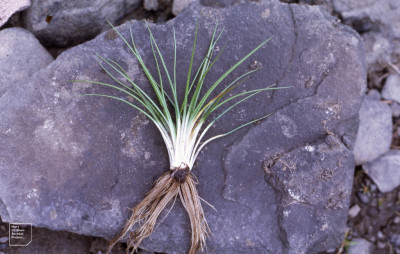
If you’re looking for something different to add to your aquarium or pond setup, Isoetes lacustris (commonly named as Quillwort plant) is a fascinating option. Belonging to the genus Isoetes, these grass-like aquatic plants are known for their stiff, quill-shaped leaves that grow in clusters from a central base. Their simple yet striking form makes them stand out while providing habitat and oxygenation in freshwater environments.
Isoetes lacustris thrives in clean, well-oxygenated water with a sandy or fine gravel substrate. It prefers cooler temperatures and does best when partially buried, allowing its corm-like base to anchor securely. These plants absorb most of their nutrients directly through their roots, so nutrient-rich substrate or root tabs help support healthy growth. Since they remain low and compact, they’re excellent foreground plants in aquariums or natural pond settings.
One of the most unique aspects of this species is the Isoetes lacustris life cycle. Unlike many common aquatic plants, it reproduce via spores instead of seeds or flowers. Specialized structures at the base of their leaves produce two types of spores: microspores and megaspores. When conditions are right, these spores germinate and combine to make new plants, continuing the sexual lifecycle. This ancient reproductive method has remained largely unchanged for millions of years, making Isoetes lacustris living fossils in modern ecosystems.
Aside from their intriguing biology, Isoetes lacustris play a useful role in aquariums and ponds. They help stabilize the substrate, improve oxygen levels, and create hiding spaces for fish and small aquatic creatures.
As a companion, Carex testacea can add ornamental texture with its fine, arching leaves and striking coppery-orange color. However, it should be planted with caution alongside Isoetes lacustris. Carex testacea is a robust, fast-spreading sedge that can outcompete slower-growing plants. Its dense root system and rapid lateral growth may overshadow or crowd the delicate Quillwort, restricting light, nutrient access, and overall development.
Aquascapers and gardeners should:
- Plant Carex testacea at a safe distance from Isoetes lacustris to prevent root encroachment.
- Monitor growth regularly and prune or divide Carex as needed to maintain balance.
- Avoid planting in confined containers without sufficient space, as competition can quickly stress Isoetes lacustris.
By taking these precautions, Isoetes lacustris and Carex testacea can coexist, offering a dynamic and visually appealing aquatic or semi-aquatic display while minimizing the risks of competition and overcrowding.
Isoetes lacustris grows best under moderate to high lighting. In aquariums, strong light keeps the leaves compact and healthy. Without enough light, growth slows, and the plant may weaken.
This plant is native to cool, clear lakes and ponds across Europe and North America. It usually grows submerged in sandy or muddy bottoms, where the water is clean and rich in oxygen.
It works better as a foreground or midground plant because it stays relatively short and forms small rosettes. In larger tanks, groups of Isoetes can create a grass-like carpet effect, but it won’t fill the background like taller stem plants.
The most frequent mistakes are planting it in poor or compacted substrate, providing weak lighting, and keeping it in warm water. Over time, these conditions cause the plant to decline. Neglecting root nutrition is another issue, since Isoetes takes in most of its nutrients through its roots rather than leaves.
Last updated on Nov 10, 2026
Species suggested by: Dina Russell, 2020
Plant Profile compiled and written by: Team PlantShare
Contributors: Team PlantShare
 Ask Us!