



 Garden The PlantShare Way ®

~ All About Fishbone Fern ~

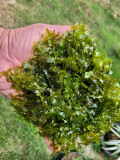
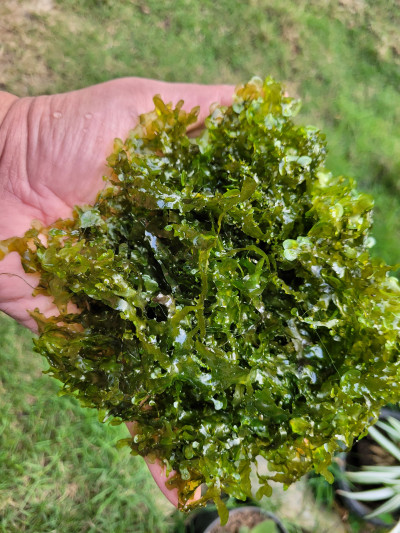
If you’re looking for an unusual and eye-catching plant for your indoor or aquatic garden, Lomariopsis lineata is a fantastic choice. This tropical fern is admired for its bright green, oval fronds and its ability to thrive in both aquariums and terrariums. It’s a hardy, adaptable species that works well for beginners who want something distinctive yet easy to manage.
Lomariopsis lineata grows best in moderate, indirect light. In aquariums, it does well under standard LED or fluorescent lighting without requiring specialized equipment. In terrariums or indoor setups, place it in a location where it receives filtered light, as direct sunlight can damage its delicate fronds.
Moisture is essential for this plant. In aquariums, it naturally attaches to rocks or driftwood and absorbs nutrients directly from the water. In terrariums, maintaining high humidity through regular misting or an enclosed environment helps support healthy growth. The goal is to keep conditions consistently damp while ensuring good airflow.
Unlike many plants, Lomariopsis lineata does not require traditional soil. In aquatic environments, it anchors itself to surfaces, while in terrestrial setups, it grows well in sphagnum moss or a loose, moisture-retentive substrate. With time, it forms a soft, lush mass that adds texture and depth to the space.
Propagation is simple and beginner-friendly. Dividing a healthy clump and attaching it to a new surface allows the plant to spread naturally. Although growth is relatively slow, patience leads to a dense, carpet-like appearance.
As a companion plant, Soleirolia soleirolii, commonly known as Baby’s Tears, works well in terrariums or high-humidity indoor displays. Its tiny, delicate leaves create a fine-textured ground layer that contrasts with the broader fronds of Lomariopsis. Both plants thrive in moist, shaded conditions, making them suitable for the same environment. However, Soleirolia soleirolii grows quickly and should be trimmed regularly to keep it under control and maintain a balanced arrangement.
With proper humidity, gentle lighting, and minimal maintenance, Lomariopsis lineata becomes a unique and rewarding addition to both aquariums and terrariums.
Lomariopsis lineata is loved in aquariums because it’s hardy, low-maintenance, and adds a natural, lush look. It grows well when attached to rocks or driftwood, and fish often use it for shelter. Unlike many aquatic plants, it doesn’t need strong light or special fertilizers, making it easy for beginners.
This plant originates from tropical regions of Asia, Africa, and the Pacific Islands. It naturally grows in humid forests and along riverbanks, where it thrives in moist conditions. Its ability to adapt to both land and water makes it a versatile species for aquariums and terrariums.
The growth of Lomariopsis lineata is slow compared to many other aquatic plants. It takes time to establish itself, but once settled, it forms thick, cushion-like mats. With stable lighting, good water quality, and consistent humidity, you’ll notice gradual expansion over several months.
Browning usually happens when the plant isn’t getting the right conditions. Common causes include low humidity in terrariums, poor water circulation in aquariums, or too much direct sunlight. Sometimes, older fronds naturally die off, which isn’t a problem as long as new growth continues. Improving light balance, water flow, and moisture usually brings the plant back to health.
Last updated on Nov 16, 2026
Species suggested by: Dina Russell, 2020
Plant Profile compiled and written by: Team PlantShare
Contributors: Team PlantShare
 Ask Us!