



 Garden The PlantShare Way ®

~ All About Red Yucca ~


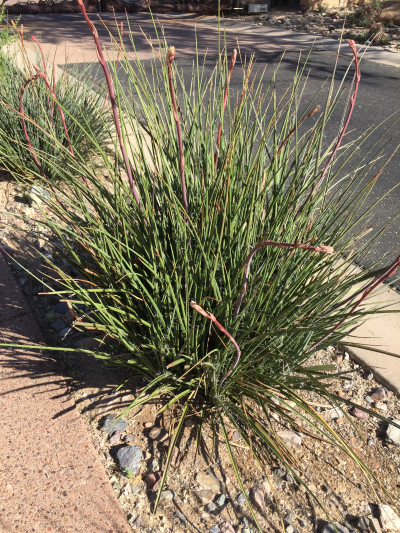
The striking Hesperaloe parviflora, often called Red Yucca, is a favorite in drought-tolerant gardens for its vivid red flowers and tough nature. This plant is not a true yucca but shares a similar look, making it perfect for both modern and desert-inspired designs.
Proper Hesperaloe parviflora care begins with planting in full sun and well-drained soil. Once established, this plant is highly drought-resistant. Understanding plant water requirements is simple: water lightly during the first growing season, then only during long dry periods. Overwatering is a common cause of poor growth.
Gardeners value Red Yucca landscaping because the plant works well as an accent, border, or mass planting. Its arching leaves and tall flower stalks add structure and color throughout summer. With a moderate growth rate, it slowly forms clumps, making it easy to man age. If you notice your Yucca is not blooming, the most likely causes are too much shade, overwatering, or plants that are still too young.
A closely related species, Hesperaloe funifera, offers a different but equally striking appearance. Known for its narrower, more fibrous leaves, Hesperaloe funifera has a finer texture and a more upright form than Hesperaloe parviflora. It produces tall flower spikes with pale pink to cream-colored blooms and is especially well suited to minimalist or architectural landscape designs.
Red Yucca propagation is usually done by dividing clumps, though it can also be grown from seed. Division ensures identical plants and faster results. Minimal maintenance is required—simply remove spent flower stalks and trim away any damaged leaves to keep the plant tidy.
This plant thrives in USDA growing zone 5 through 11, making it widely adaptable across the United States. It’s worth noting that although the plant is not commonly harmful, questions about Hesperaloe parviflora poisonous risks do arise. The leaves contain tough fibers that may cause mild stomach issues if eaten, so it’s best to keep pets and children from chewing on them.
With easy plant care and low water needs, Red Yucca is a resilient, beautiful addition to beginner gardens.
Cut off the tall flower stalks after they finish blooming. Use sharp garden shears and cut them close to the base. If any leaves are brown or damaged, remove them at the bottom to keep the plant neat. Avoid cutting healthy green leaves.
Choose a sunny spot with soil that drains well. Dig a hole twice as wide as the root ball but about the same depth. Place the plant in the hole, backfill with soil, and water lightly to help the roots settle.
The best time to plant is in spring or early fall. These seasons give the plant time to establish roots before extreme heat or cold arrives.
Hesperaloe parviflora grows well in both pots and the ground. In warm, dry climates, it thrives planted directly in the soil as part of a landscape. In colder areas, pots make it easier to move the plant to a protected spot during winter.
Last updated on Nov 16, 2026
Species suggested by: Catherine Ko, 2021
Plant Profile compiled and written by: Team PlantShare
Contributors: Catherine Ko
 Ask Us!