



 Garden The PlantShare Way ®
~ All About Queen Victoria Agave ~


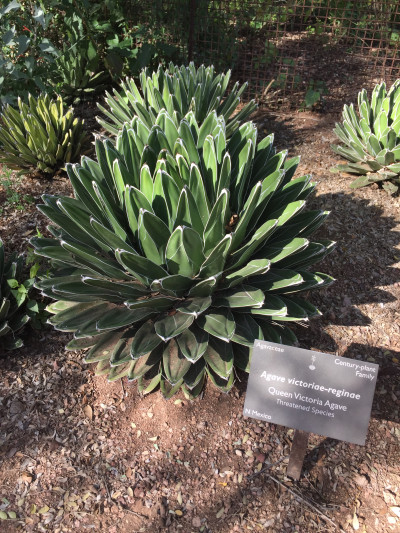
For gardeners who love bold, sculptural plants, Agave victoriae-reginae, commonly called Queen Victoria agave, is a true showstopper. Native to northern Mexico, this compact agave forms a perfect rosette of thick, triangular leaves with striking white markings and dark tips. Its geometric symmetry and slow growth make it a favorite for rock gardens, desert landscapes, and contemporary container designs.
Caring for Agave victoriae-reginae is easier than it looks. This hardy succulent thrives in full sun and well-drained soil, making it perfect for dry or low-water gardens. Overwatering is the most common mistake, this agave prefers to dry out completely between waterings. In regions with heavy rainfall or cold winters, planting it in a raised bed or pot helps prevent root rot. A gritty cactus mix or sandy soil provides the drainage it needs to stay healthy.
This species is drought-tolerant and highly adaptable, thriving in USDA zones 9–11. However, gardeners in cooler climates can grow Agave victoriae-reginae indoors near a bright, sunny window. During winter, reduce watering to once a month to mimic its natural dry season. It rarely requires fertilizer but benefits from a light feeding of succulent-specific plant food in spring.
One of the most fascinating aspects of Agave victoriae-reginae is its blooming cycle. Like most agaves, it’s monocarpic, meaning it flowers once at the end of its life, usually after several decades, producing a tall stalk with creamy white blooms before setting seeds or offsets.
As a companion plant, Aloe vera pairs exceptionally well with Queen Victoria agave. Both plants enjoy full sun, excellent drainage, and infrequent watering, making them easy to care for together. Aloe vera’s softer, fleshy leaves contrast beautifully with the sharp, geometric form of the agave, adding visual balance while maintaining a cohesive desert or succulent-themed planting.
With its sculptural beauty, resilience, and minimal care requirements, Agave victoriae-reginae, especially when paired with Aloe vera is an ideal choice for gardeners who value structure, simplicity, and long-lasting impact.
Agave victoriae-reginae can handle short periods of light frost but not freezing winters. It grows best in warm, dry climates and is hardy only in USDA zones 9–11. If you live in a colder region, it’s safer to keep it in a pot and bring it indoors when temperatures drop below 40°F (4°C).
Yes, Agave victoriae-reginae grows very well in containers. Choose a pot with good drainage and fill it with a cactus or succulent soil mix. Place the container in full sun and water only when the soil is completely dry. Container growing also makes it easy to move the plant indoors during cold or rainy seasons.
The best soil for Agave victoriae-reginae is one that drains quickly. A mix of sand, gravel, and cactus potting soil works perfectly. Avoid heavy clay soils, as they hold too much water and can cause root rot. Good drainage is the most important factor for keeping this agave healthy.
Agave victoriae-reginae is a very slow-growing plant. It can take many years to reach its full size, which is usually about 12–18 inches across. Its slow growth makes it an excellent choice for small gardens, rock displays, or indoor pots where space is limited. With proper light and minimal water, it will stay compact and striking for decades.
Last updated on Aug 02, 2026
Species suggested by: Catherine Ko, 2021
Plant Profile compiled and written by: Team PlantShare
Contributors: Jeffrey Lazar
 Ask Us!

