



 Garden The PlantShare Way ®

~ All About Japanese sedge ~


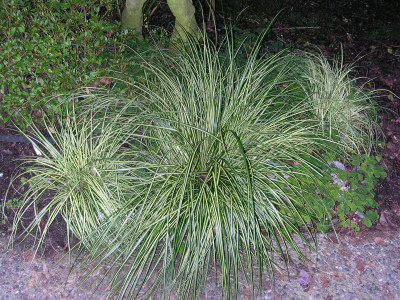
If you’re looking for a graceful, easy-to-grow plant that adds texture and brightness to your garden, Carex oshimensis ‘Everest’ is a perfect choice. This elegant Japanese sedge features narrow, arching leaves with crisp white edges that provide year-round interest. It works beautifully in borders, containers, or shaded garden areas where many other plants struggle.
Carex oshimensis ‘Everest’ is very beginner-friendly. It prefers partial shade to full shade, though it can handle a bit of gentle morning sun in cooler climates. The soil should be well-drained yet consistently moist and enriched with organic matter. While it’s fairly forgiving, letting the soil dry out completely, especially during summer, can stress the plant and dull its foliage.
Maintenance is minimal. The plant keeps a neat, compact shape on its own and rarely needs trimming. Simply remove tired or damaged leaves in early spring to make room for fresh growth. In mild climates, it stays evergreen, offering structure and color even through winter. Mulching helps conserve moisture and enhances its tidy appearance.
As a companion plant, Myosotis sylvatica pairs beautifully with Carex oshimensis ‘Everest’. Commonly known as forget-me-not, this short-lived perennial produces delicate blue flowers in spring that brighten shaded spaces. It thrives in similar conditions: partial shade and moist, fertile soil, making it an easy and natural partner. The soft, cloud-like blooms of Myosotis contrast gently with the bold, arching foliage of the sedge, creating a layered, woodland-style look.
Together, these plants are ideal for shaded borders, underplanting trees, or adding interest to containers. Carex provides year-round structure, and Myosotis adds a seasonal burst of color, resulting in a planting that feels balanced, low-maintenance, and effortlessly elegant.
Carex oshimensis ‘Everest’ grows best in rich, well-drained soil that stays lightly moist. It doesn’t need anything fancy—just add some compost or organic matter when planting to improve texture and nutrients. A slow-release, balanced fertilizer in early spring can boost growth, but too much feeding can make the leaves floppy, so keep it moderate.
This variety keeps a naturally tidy, arching form, but you can refresh its look each year. In late winter or early spring, trim back old or damaged leaves close to the base before new growth begins. Removing any brown tips during summer also helps maintain a crisp, healthy appearance.
In mild or temperate regions, Carex oshimensis ‘Everest’ stays evergreen, keeping its striped foliage all year round. In colder climates, the leaves may brown or die back during winter, but new shoots will return in spring. A layer of mulch around the roots helps protect the plant from freezing temperatures.
You can easily grow Carex oshimensis ‘Everest’ in containers as well as in garden beds. It adapts beautifully to pots, hanging baskets, or mixed planters. Choose a container with good drainage and use quality potting mix that holds some moisture without becoming soggy. In containers, water more regularly, as soil dries out faster than in the ground. This flexibility makes it a great option for patios, shaded balconies, or small urban gardens.
Last updated on Jun 18, 2026
Species suggested by: Dina Russell, 2020
Plant Profile compiled and written by: Team PlantShare
Contributors: Team PlantShare & Jeffrey Lazar
 Ask Us!