




 Garden The PlantShare Way ®
~ All About Crown of thorns ~


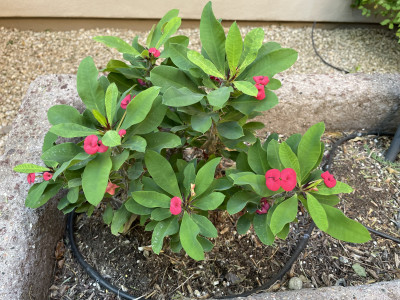
If you’re looking for a vibrant, low-maintenance houseplant, Euphorbia milii, also known as the Crown of Thorns, is a perfect choice. Native to Madagascar, this hardy succulent produces colorful blooms almost year-round when given the right conditions. Understanding proper plant care will keep your plant healthy and full of life.
When planting Crown of Thorns, choose a container with drainage holes and use a gritty, cactus-style potting mix. The plant thrives in full sunlight, so place it near a bright window or outdoors in a sunny spot. Water deeply but let the soil dry between waterings, as too much moisture can lead to root rot.
There are many varieties to explore, ranging from compact forms to larger shrubs with striking flower colors like red, pink, yellow, and white. Each variety offers a unique texture and growth habit, allowing gardeners to mix and match for visual interest. It pairs beautifully with Aeonium haworthii as a companion plant. Both succulents prefer bright light and well-draining soil, making them easy to grow together in containers or sunny garden beds. The rosette-shaped leaves of Aeonium haworthii create a soft contrast against the thorny stems and vivid blooms of Crown of Thorns, resulting in a balanced and eye-catching arrangement.
If you’d like to grow more plants, Euphorbia milii propagation is simple. Take healthy stem cuttings, allow them to dry for a day or two so the sap can seal, then place them in well-draining soil. Keep them warm and slightly moist until they root.
Regular pruning helps maintain a compact shape and encourages new blooms. Trim away dead or leggy stems after flowering, but always wear gloves: the plant’s milky sap can irritate skin.
With the right balance of sunlight, water, and attention, Euphorbia milii will reward you with months of bright color and strong growth.
Take a short stem cutting about 3–4 inches long from a healthy plant. Let the cut end dry for one or two days so the milky sap seals. Once dry, plant the cutting in a small pot filled with sandy or cactus soil. Keep it in bright, indirect light and water lightly until roots form, which usually takes a few weeks.
Place it in a bright spot with several hours of direct sunlight each day. Use well-draining soil and water only when the top inch feels dry. Avoid overwatering, as it can cause root rot. The plant prefers warm temperatures and low humidity. Feed it once a month during spring and summer with a balanced fertilizer made for succulents.
Prune after the flowering season or when the plant looks overgrown. Use sharp, clean scissors or shears, and wear gloves because the sap can irritate skin. Cut off dead, weak, or crossing stems to shape the plant and encourage new growth. Dispose of trimmed pieces safely, as they can still release sap.
After cutting and drying the stems, plant them upright in well-draining soil. Keep the soil slightly moist but not wet. Place the pot in a warm, bright area, and roots will start forming within a month. Once rooted, treat them like mature plants.
Yes. The white sap inside the stems and leaves is toxic if swallowed and can cause skin irritation or eye problems. Keep it away from pets and children, and always wash your hands after handling the plant.
Last updated on Jul 15, 2026
Species suggested by: Catherine Ko, 2022
Plant Profile compiled and written by: Team PlantShare
Contributors: Catherine Ko
 Ask Us!