



 Garden The PlantShare Way ®
~ All About Pink evening primrose ~


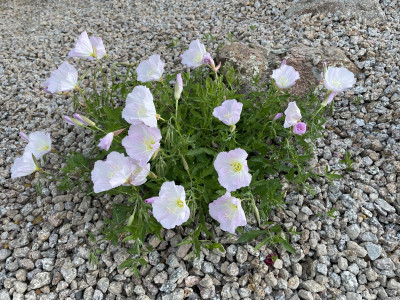
If you want a resilient, colorful addition to your garden, Oenothera speciosa, commonly known as Evening Primrose, is a great choice. Known for its bright yellow blooms that open at dusk, this plant adds charm to flower beds and pollinator gardens. Learning the proper care of Oenothera speciosa plants will help you enjoy their beauty for many seasons.
Evening primrose thrives in full sun and well-draining soil. Understanding light requirements is key to healthy growth: these plants need at least six hours of sunlight daily to produce their signature blooms. They tolerate poor soil and dry conditions, making them perfect for low-maintenance gardens. Water only when the top inch of soil feels dry, as too much moisture can lead to root problems.
It pairs well with Salvia officinalis as a companion plant. Both enjoy full sun and well-drained soil, and their drought tolerance makes them ideal partners in xeriscape or Mediterranean-style gardens. The silvery foliage of sage contrasts beautifully with the delicate blooms of evening primrose, while sage’s aromatic leaves may help deter certain garden pests.
While Oenothera speciosa is a favorite among gardeners for its reliability, it’s important to know that it can be invasive in certain regions. Once established, it spreads quickly through self-seeding and underground roots. To control its growth, deadhead spent flowers before they set seed, or plant it in contained areas such as raised beds or pots.
Because of its spreading habit, many gardeners use this plant as ground cover to fill large open spaces or sunny borders. Its dense foliage helps prevent weeds while providing a soft carpet of greenery that bursts into color during blooming season.
With regular trimming and proper spacing, Oenothera speciosa can stay neat and manageable. It’s also deer-resistant and attracts beneficial insects like bees and butterflies.
Evening primrose (Oenothera speciosa) usually blooms from late spring through early fall, depending on the climate. The flowers open in the evening or at night, giving off a light, sweet scent that attracts moths and other pollinators. Each bloom lasts only a day, but new flowers keep appearing for several months.
The best time to plant Evening primrose is in early spring after the last frost. You can also plant it in late fall in mild climates so the seeds naturally sprout when the weather warms. Choose a time when the soil is workable and not too wet.
Scatter the seeds over well-draining soil in a sunny location. Lightly press them into the surface but don’t cover them too deeply—they need sunlight to germinate. Water gently to keep the soil moist until seedlings appear. Once the plants grow a few inches tall, thin them so each one has space to spread.
Many types of Evening primrose are perennial, meaning they return year after year. However, some species are biennial or annual. The perennial varieties usually form clumps that grow larger each season and bloom more heavily with time.
Yes, Oenothera speciosa is generally deer resistant. Its leaves have a slightly bitter taste that deer and rabbits tend to avoid, making it a good choice for wildlife-heavy areas.
Yes, it grows well in containers as long as the pot has drainage holes and receives full sun. Use sandy or loamy soil, water when the top layer feels dry, and avoid overwatering. Container-grown plants may bloom slightly earlier than those in the ground.
Last updated on May 31, 2026
Species suggested by: Catherine Ko, 2022
Plant Profile compiled and written by: Team PlantShare
Contributors: Team PlantShare
 Ask Us!