




 Garden The PlantShare Way ®

~ All About Cherokee rose ~


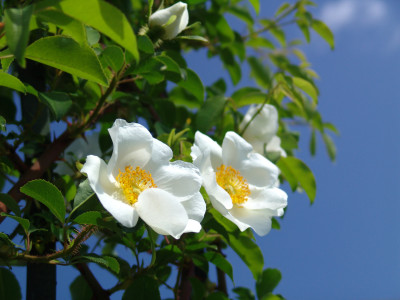
If you want a vigorous climbing rose that delivers strong growth and large, eye-catching flowers, consider planting Rosa laevigata. Commonly known as the Cherokee rose, this species is admired for its glossy leaves, bright white blooms, and ability to cover fences, trellises, and large open spaces with ease. Even beginners can grow it successfully when they understand its basic needs.
Start by choosing the right location. Rosa laevigata thrives in full sun, where it receives at least six hours of direct light each day. Good light encourages more flowers and keeps the plant’s growth compact and controlled. While it can handle partial shade, shaded spots often result in fewer blooms and longer, weaker stems. Plant it in well-drained soil with enough organic matter to support steady growth.
Watering is simple. Young plants need consistent moisture during the first few months, but once established, this rose tolerates dry conditions far better than many other species. Deep watering every week or two helps the roots stay strong and encourages better flowering. Avoid watering lightly or too often, as this can lead to shallow roots and weaker growth.
Pruning helps maintain shape and supports healthier blooms. Trim away dead or thin branches in late winter, and guide long canes along a fence or trellis to encourage horizontal growth. This technique often produces more flowering shoots in spring.
Fertilizing once or twice a year keeps Rosa laevigata vigorous. Use a balanced fertilizer in early spring, then apply a second, lighter feeding in midsummer if the plant needs extra strength.
As a companion plant, Nepeta cataria compliments the colors and textures of Rosa laevigata. Commonly known as catnip, this hardy perennial produces soft gray-green foliage and clusters of pale lavender flowers. It thrives in full sun and well-drained soil, conditions similar to those preferred by the Cherokee rose. Nepeta cataria forms a low, spreading mound at the base of taller plants, helping to suppress weeds and soften the appearance of bare soil. Its long blooming season attracts pollinators such as bees and butterflies, complementing the rose’s dramatic spring display. The contrast between the rose’s bold white flowers and catnip’s airy purple blooms creates a balanced and visually appealing garden combination.
With the right care: sunlight, deep watering, and selective pruning, Rosa laevigata becomes a striking, reliable presence in any garden. Its elegant flowers and tough nature make it an excellent choice for gardeners who want beauty with minimal fuss.
Rosa laevigata usually blooms once a year in spring. The flowers stay on the plant for about two to four weeks, depending on weather and growing conditions.
Give the plant full sun, well-drained soil, and enough space to spread. Water deeply during dry spells, especially while the plant is young. Prune in late winter to remove dead or weak branches and to guide long canes along a fence or trellis. A light feeding in spring helps support strong growth and healthy blooms.
Rosa laevigata is a perennial. It comes back every year and can live for many years with proper care.
The plant grows best in loose, well-drained soil with some organic matter. It handles slightly acidic to neutral soil well. Avoid heavy, soggy soil because it restricts root growth and reduces flowering.
Last updated on May 31, 2026
Species suggested by: Catherine Ko, 2022
Plant Profile compiled and written by: Team PlantShare
Contributors: Team PlantShare
 Ask Us!