



 Garden The PlantShare Way ®

~ All About Colorado Blue Columbine ~


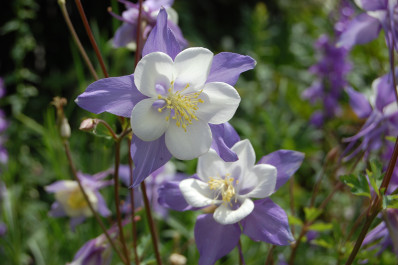
If you want a reliable spring bloomer with elegant, bell-shaped flowers, learning to grow columbine (Aquilegia caerulea) is a great place to start. These hardy perennials bring soft color, unique shapes, and gentle movement to garden beds. They adapt well to many climates and require only moderate care, making them perfect for new gardeners who want dependable results.
Understanding columbine bloom time helps you plan your garden. Columbines typically flower from late spring to early summer, offering several weeks of color before warmer temperatures slow their growth. Their airy stems and delicate petals pair well with ferns, hostas, and early-season perennials.
Good care of columbine plants begins with choosing the right spot. Columbines grow well in partial shade, especially in warm regions, but they also handle full sun in cooler climates. Well-drained soil enriched with light organic matter keeps roots healthy and supports steady growth. Water young plants regularly, then reduce watering once they establish.
Gardeners who want more plants often try propagation. Columbines grow easily from seed, but you can also attempt Aquilegia caerulea propagation cuttings if you want to reproduce specific colors or traits. Rooting success varies, but cuttings taken from fresh spring growth sometimes produce strong new plants.
To keep your plants productive, practice simple flower pruning. Remove faded blooms to encourage fresh flowers and prevent unwanted self-seeding. Cutting the stems back after blooming also keeps the plant neat and directs energy toward new foliage.
Before planting, check the growing zones. Most varieties thrive in Zones 3–9, giving gardeners in many regions a reliable, cold-tolerant perennial.
As a companion plant, Brunnera macrophylla nicely complements columbines. Known for its heart-shaped leaves and clusters of small, sky-blue flowers in early spring, Brunnera thrives in partial to full shade and prefers moist, well-drained soil, conditions similar to those favored by columbines. While Aquilegia provides height and airy blooms, Brunnera forms a dense, leafy base that adds texture and long-lasting ground coverage. Its foliage remains attractive throughout the growing season, creating a layered planting effect that enhances both spring color and overall garden structure.
With thoughtful placement, light pruning, and consistent moisture, columbines and Brunnera together create a balanced, elegant display that returns year after year with minimal maintenance.
They usually bloom from late spring to early summer. Cooler climates may extend the bloom time by a couple of weeks.
Plant the seeds in fall or very early spring. They need a period of cold to sprout well, so cool weather helps them germinate.
Yes, Columbines are perennials. They return every year and often reseed themselves, creating new plants nearby.
Most Columbines bloom for 3–4 weeks. Good care and cool temperatures can stretch the bloom period a bit longer.
Choose a spot with partial shade and loose, well-drained soil. Keep the soil slightly moist while the plant is young. Once established, it handles mild drought and needs only occasional watering.
Water during long dry spells, remove spent flowers to keep the plant neat, and trim the stems after blooming. A small amount of compost in spring helps the plant make strong foliage and better blooms.
In nature, they grow in meadows, mountain slopes, open forests, and rocky areas. They like cool conditions and well-drained soil.
Yes, you can grow Aquilegia in pots. Use a container with good drainage and a light potting mix. Keep the soil evenly moist, and place the pot in a spot with morning sun and afternoon shade.
Most plants reach 18–30 inches tall, though some varieties can grow a little taller in ideal conditions.
Last updated on Aug 02, 2026
Species suggested by: Patricia Ross, 2022
Plant Profile compiled and written by: Team PlantShare
Contributors: Team PlantShare
 Ask Us!