



 Garden The PlantShare Way ®

~ All About Mountain Laurel ~


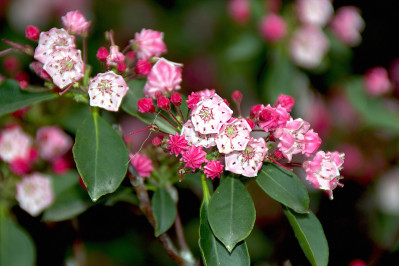
Mountain laurel (Kalmia latifolia) is an iconic evergreen shrub prized for its glossy foliage and spectacular spring blooms, and with the right care, it can grace your garden for decades. To set it up for success, start by choosing the variety that best suits your space—options range from compact forms perfect for smaller gardens to taller selections ideal for natural screening.
Choosing the right spot is essential because ideal Mountain laurel growing conditions involve partial shade, cool roots, and acidic, well-drained soil. If the plant struggles, poor location is often the reason. When you notice your Mountain laurel is not blooming, it’s often due to too much shade, a nutrient imbalance, or dry conditions during the bud-forming stage.
Propagation is possible, and beginners can try propagating it through semi-hardwood cuttings taken in midsummer. Although this method takes patience, it produces strong, true-to-parent plants. When shaping or refreshing an older shrub, focus on correct pruning techniques. Light pruning right after flowering prevents damage to next year’s buds and keeps the plant full and healthy.
If you need to relocate your shrub, timing and soil prep make a big difference. Transplantion of Mountain laurel works best in early spring or early fall, when temperatures are mild. Dig wide rather than deep, keep the root ball intact, and water consistently while the plant re-establishes.
Even with good care, you may encounter common plant diseases such as leaf spot, blight, or root rot. Proper spacing, good air circulation, and avoiding overhead watering greatly reduce these issues.
Vaccinium ovatum, the Evergreen Huckleberry, shares similar growing preferences as Mountain Laurel: acidic soil, partial shade, and consistent moisture, making it a natural partner in woodland gardens. Its small, glossy leaves complement the bold foliage of Kalmia, while its delicate pinkish-white spring flowers and dark edible berries add seasonal interest. Together, these shrubs create a layered, evergreen planting that supports pollinators and provides year-round structure, texture, and subtle color variation.
With the right placement and compatible companions, Mountain Laurel can become a long-lasting focal point that brings elegance and resilience to shaded garden spaces.
Yes. All parts of the plant are toxic if eaten, including the leaves, flowers, and stems. Pets, livestock, and people should never consume it.
The easiest method is using semi-hardwood cuttings in midsummer. Cut a healthy stem, remove lower leaves, dip the end in rooting hormone, and place it in moist, acidic soil. Keep it humid until roots form.
Sow the seeds on the surface of a moist, acidic seed mix and do not cover them. They need light to germinate. Keep them warm and consistently moist. Seedlings grow slowly and may take a couple of years to become strong enough for planting outdoors.
It grows slowly. Most plants add only a few inches each year, especially when they are young. Mature shrubs may grow a bit faster, but overall it’s considered a slow-growing evergreen.
Prune right after the plant finishes blooming. This keeps next year’s flower buds safe and allows you to shape the shrub without reducing future blooms.
The best time is early spring or early fall. Cooler weather helps the roots settle in without heat stress.
Mountain laurel naturally grows in the eastern United States. It’s common in woodlands, rocky slopes, and mountain areas with acidic, well-drained soil.
Last updated on Nov 10, 2026
Species suggested by: Dina Russell, 2022
Plant Profile compiled and written by: Team PlantShare
Contributors: Team PlantShare
 Ask Us!