



 Garden The PlantShare Way ®

~ All About Yellow Bells ~


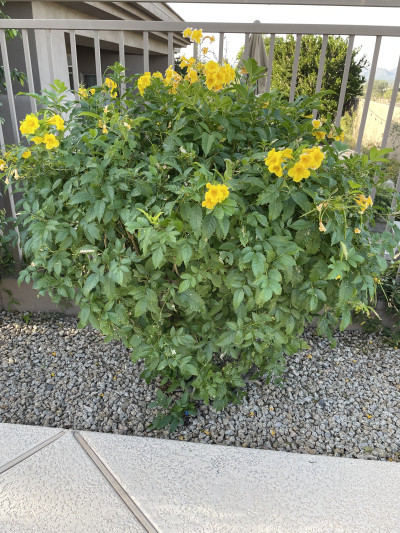
Tecoma stans, commonly called Yellow bells, is a hardy, sun-loving shrub celebrated for its clusters of bright yellow, trumpet-shaped flowers. With blooms that brighten the garden from spring through fall, it’s a favorite choice for borders, containers, and vibrant landscape accents, making proper care essential for gardeners who want lasting color.
When it comes to Tecoma stans care, sunlight is a critical factor. This plant thrives in full sun, requiring at least six hours of direct light daily. Well-draining soil is also important to prevent root rot. While Tecoma stans tolerates drought once established, regular watering during the first growing season encourages strong root development. Fertilize sparingly with a balanced, slow-release fertilizer in early spring to support healthy growth and prolific flowering.
Pruning is another key aspect of Tecoma stans care. Light pruning helps maintain shape and encourages new blooms, while removing dead or damaged branches improves overall plant health. Tecoma stans can grow rapidly, so pruning annually or as needed keeps it manageable in both garden beds and containers.
Gardeners can choose from various Tecoma stans varieties to suit their space and style. Some popular varieties include ‘Gold Star,’ known for its compact growth, and ‘Sunrise,’ which offers a bushy, abundant flowering habit. Each variety presents unique attributes, allowing gardeners to select the perfect plant for their climate and design needs.
As a companion plant, Festuca glauca creates an attractive contrast. Commonly known as Blue Fescue, this ornamental grass forms neat mounds of silvery-blue foliage that complement the vivid yellow flowers of Tecoma stans. Both plants prefer full sun and well-drained soil, making them compatible partners as long as they are grown side-by-side, i.e. Festuca glauca in the shade directly under this tree. While Tecoma provides height and bold color, Festuca glauca adds texture and cool-toned foliage at ground level. The combination offers visual balance, drought tolerance, and a modern, low-maintenance look suitable for sunny borders or xeriscape gardens.
With proper sunlight, well-drained soil, light fertilization, and thoughtful pruning, Tecoma stans becomes a reliable, long-lasting focal point. Paired with contrasting companions like Blue Fescue, it delivers vibrant color and texture with minimal effort.
The best time to prune is in late winter or early spring, before new growth starts. Light pruning can also be done after flowering to shape the plant or remove dead branches.
Tecoma stans grows best in full sun, well-draining soil, and warm climates. Plant it in a sunny spot, water regularly until established, then reduce watering as it’s drought-tolerant.
Trim by removing dead, damaged, or crossing branches. You can also shorten long stems to shape the bush. Use clean, sharp tools, and avoid cutting too much at once to prevent stress.
No, Tecoma stans is generally considered non-toxic to humans and pets. However, it is always a good idea to supervise children and pets around any plant, as ingesting large amounts of plant material can cause stomach upset.
Last updated on Nov 15, 2026
Species suggested by: Catherine Ko, 2022
Plant Profile compiled and written by: Team PlantShare
Contributors: Team PlantShare
 Ask Us!