




 Garden The PlantShare Way ®

~ All About Totem Pole Cactus ~


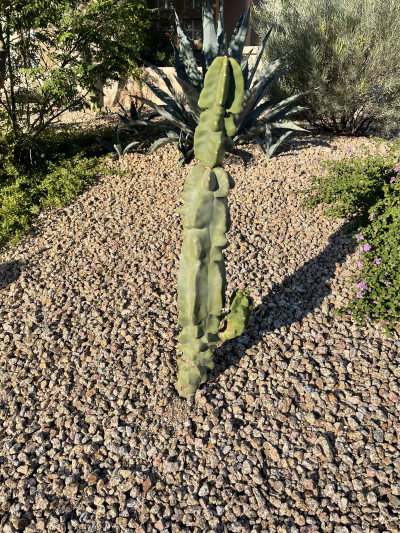
Looking for a striking succulent to your garden or indoor collection? Look no further! Understanding proper care for Pachycereus schottii f. monstrosus is key to keeping this unusual plant healthy and vibrant. Native to Mexico, the Totem Pole Cactus is known for its tall, columnar growth and smooth, ribbed stems with a sculptural, almost carved appearance. Its bold form makes it a standout choice for desert-inspired landscapes or bright indoor spaces.
Successful care begins with light and soil. This cactus thrives in full sun and needs at least six hours of direct light daily. Indoors, place it near a south- or west-facing window for best results. Use a well-draining cactus or succulent mix to prevent excess moisture around the roots. Water sparingly, allowing the soil to dry completely between waterings. Overwatering is the most common issue, so it’s safer to underwater than overwater. During the growing season, apply a diluted cactus fertilizer once or twice to support steady, healthy growth.
Temperature is another important factor. While the Totem Pole Cactus tolerates intense heat, it is sensitive to frost and should be protected from freezing conditions. If grown in a container, rotate the pot occasionally to ensure even sun exposure and balanced growth.
Propagation is straightforward through stem cuttings. After cutting, allow the piece to callus for several days before placing it in dry, well-draining soil. Keep conditions warm and bright, and water lightly only after roots begin to form. This method preserves the plant’s unique, bumpy texture.
For companion planting, rosette-forming succulents work especially well with the upright cactus. Echeveria elegans, often called Mexican Snowball, features compact blue-green rosettes that create a soft visual contrast to the cactus’s tall, vertical form. Its tidy growth habit allows it to spread gently around the base of the cactus, filling empty space while maintaining the clean structure of the arrangement.
Another suitable companion is Echeveria rosea, which offers a similar low-growing rosette shape but with subtle pinkish tones that add warmth and variation to the display. When planted nearby, it enhances the overall desert-inspired aesthetic while remaining visually distinct from the cooler blue-green hues of Echeveria elegans.
Both succulents prefer bright light, excellent drainage, and minimal watering, conditions that align perfectly with Totem Pole Cactus care. Their spreading rosettes can fill the base of a container or garden bed, adding texture and visual balance to the cactus’s striking vertical presence.
This cactus is slow-growing. Even under ideal conditions, it can take several years to reach a significant size. Its growth is steady but gradual, so patience is important when cultivating it.
It prefers well-draining, sandy or rocky soil. A mix of cactus potting soil with added perlite or coarse sand works well. Avoid heavy clay or soil that retains water, as this can cause root rot.
Yes, it can produce flowers. The blooms are usually white to yellowish and appear near the tips of mature stems. After flowering, it may produce small fruits, but fruiting is less common in young plants or in indoor conditions.
This cactus needs full sun to partial shade. Ideally, it should get at least 6 hours of direct sunlight daily. In extremely hot climates, some afternoon shade can prevent sunburn, especially on young plants.
Last updated on Nov 15, 2026
Species suggested by: Catherine Ko, 2022
Plant Profile compiled and written by: Team PlantShare
Contributors: Team PlantShare
 Ask Us!