



 Garden The PlantShare Way ®

~ All About Indian Spurge Tree ~


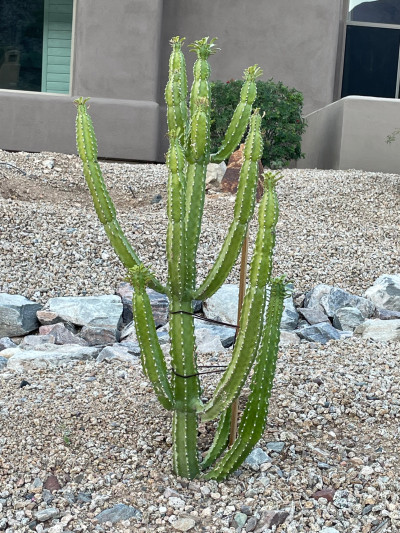
Euphorbia royleana is a striking succulent that brings architectural beauty to any garden. Its upright, columnar stems and spiny ridges give it a bold, sculptural presence, making it an excellent choice for xeriscapes, rock gardens, or container planting. This plant thrives in hot, dry conditions, making it perfect for gardeners looking for low-maintenance greenery.
When planting Euphorbia royleana, choose a location with full sun to partial shade. The plant performs best with at least six hours of sunlight daily, although some afternoon shade in extremely hot climates can prevent scorching. It prefers well-draining soil, such as a mix of sandy loam and coarse sand or gravel. Avoid heavy, water-retaining soils, as excess moisture can lead to root rot.
Watering Euphorbia royleana is straightforward but requires caution. Allow the soil to dry completely between waterings, especially in cooler months when the plant’s growth slows. Overwatering can quickly damage its roots, while drought-tolerant mature plants survive long dry periods without stress. Fertilize sparingly during the growing season with a balanced, low-nitrogen fertilizer to encourage steady growth without softening the stems.
Propagation is simple through stem cuttings. Allow cuttings to callus for a few days before planting in well-draining soil. Euphorbia royleana produces small yellow-green flowers, typically on mature plants, adding seasonal interest to its dramatic form.
As a companion plant, Lavandula angustifolia is well suited to grow alongside Euphorbia royleana. English lavender thrives in similar conditions (full sun, excellent drainage, and moderate to low watering). Its compact form and soft purple flower spikes provide a pleasing contrast to the tall, rigid structure of Euphorbia. While Euphorbia delivers bold vertical lines and evergreen presence, lavender adds fragrance, pollinator appeal, and seasonal color. Together, they create a drought-tolerant, Mediterranean-inspired planting scheme that balances structure with softness.
With proper sunlight, well-drained soil, and restrained watering, Euphorbia royleana becomes a long-lasting focal point. Combined with complementary plants like lavender, it offers a visually striking and low-maintenance landscape design suited to warm, sunny environments.
Euphorbia royleana can grow up to 10–15 feet (3–4.5 meters) tall in ideal outdoor conditions. In containers or less favorable climates, it usually remains smaller, around 3–6 feet. Its vertical, column-like stems make it a striking architectural plant.
This plant prefers well-draining soil, such as sandy, rocky, or cactus mix soils. Heavy or clay soils that retain water can cause root rot. Adding coarse sand, gravel, or perlite improves drainage and helps the plant thrive.
Euphorbia royleana produces small, yellow-green flowers, but it does not bloom frequently in cultivation. Flowering is more common in mature plants grown outdoors in full sun. Indoor or younger plants may rarely flower.
Common pests include mealybugs, spider mites, and scale insects. Mealybugs feed on sap and leave white cottony residues, while spider mites cause tiny discolored spots on stems. Scale insects attach to stems and weaken the plant over time. Inspecting the plant regularly and removing pests early helps prevent serious damage.
Last updated on Nov 10, 2026
Species suggested by: Catherine Ko, 2022
Plant Profile compiled and written by: Team PlantShare
Contributors: Team PlantShare & Catherine Ko
 Ask Us!