



 Garden The PlantShare Way ®
~ All About Pink lady’s slipper ~


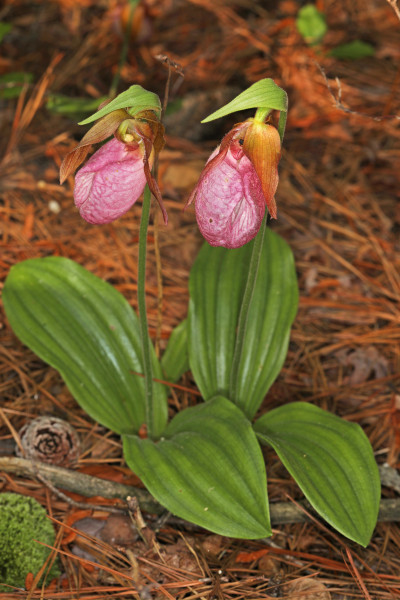
Lady slipper orchids (Cypripedium acaule) are beloved for their unusual pouch-shaped blooms, and with the right care, they can thrive even in cool, shaded gardens. These orchids prefer steady moisture, rich organic soil, and filtered light that keeps their roots cool and protected. Mulching with leaf mold or fine bark helps mimic their natural forest-floor habitat, creating the consistent conditions young lady slippers need to grow well.
Understanding bloom time makes planning easier. Most varieties bloom in late spring to early summer, producing their signature pouch-shaped flowers. Each bloom lasts several weeks, and mature clumps often produce multiple stems. Because they grow slowly, patience becomes an important part of their care routine.
If you need to move a plant, handle transplanting with extra care. Cypripedium acaule roots dislike disturbance, so transplant only when necessary and always during early spring or early fall. Lift the entire root mass gently, keep the soil around the roots intact, and replant at the same depth. Water well and shade the area until the plant settles.
Gardeners who want to expand their patch can explore plant propagation. Division works for mature clumps, but it should be done sparingly since these orchids grow slowly. Carefully separate sections with at least three growth buds and replant each piece in rich, moist soil. Seed propagation is possible but requires specialized conditions, so most home gardeners rely on division.
As a companion plant, Trillium ovatum makes an excellent choice for the same woodland setting. Trillium ovatum thrives in cool, shaded environments with rich, well-draining soil, conditions very similar to those preferred by lady slipper orchids. Its three-petaled white flowers appear in early to mid-spring, often before or just as lady slippers begin their show, extending the seasonal interest in your garden.
With steady moisture, rich soil, and a cool, shaded environment, plant care becomes straightforward. Once established, these orchids provide long-lasting structure and elegant seasonal color. Their sculptural blooms, unique growth habit, and woodland charm make lady slippers a rewarding choice for gardeners seeking something truly distinctive.
Most Lady slipper orchids bloom in late spring to early summer. Depending on the variety and local climate, flowers can appear from May through June.
Lady slippers naturally grow in cool, shaded forests, often in rich, moist soil. They are found in parts of North America, Europe, and Asia, usually under trees where the soil stays damp but well-drained.
Plant them in shaded or partially shaded areas with rich, organic soil. Keep the soil moist but not soggy. Mulching helps maintain root temperature and moisture. Avoid disturbing the roots, as they grow slowly.
Yes, many pink lady slipper species, especially in the wild, are considered threatened or endangered due to habitat loss and overcollection. Cultivating them in gardens helps protect wild populations.
Lady slippers usually bloom once a year. Mature plants may produce multiple stems per season, but young plants often take several years to flower reliably.
Provide consistent moisture, shade, and rich organic soil. Avoid overwatering, and mulch lightly to keep roots cool. Remove dead leaves and spent flowers gently. Limit disturbance to the roots to prevent stress.
Last updated on Jun 03, 2026
Species suggested by: Dina Russell, 2022
Plant Profile compiled and written by: Team PlantShare
Contributors: Team PlantShare
 Ask Us!