



 Garden The PlantShare Way ®
~ All About Flowering dogwood ~

Adding a flowering dogwood to your garden brings color, structure, and seasonal interest. Knowing how to plant a flowering dogwood tree (Cornus florida) properly ensures healthy growth and vibrant blooms. Choose a location with the right light, water, and soil conditions to maximize success. flowering dogwood light requirements include partial shade to filtered sunlight. Too much direct sun can stress the tree, while deep shade may reduce blooms.
Its soil requirements are equally important. These trees prefer slightly acidic, well-draining soil enriched with organic matter. Avoid compacted or soggy areas, as poor drainage can lead to root rot. Water requirements call for consistent moisture, especially during the first few years and during dry spells. Mulching helps retain soil moisture and protects roots.
Understanding flowering dogwood tree growing zones is key to planting success. Most them thrive in USDA Zones 5–9. Planting in the correct zone increases flowering potential and overall tree health. If you notice that your dogwood tree isn't blooming, common causes include insufficient light, improper pruning, or stress from drought or poor soil. Adjusting care practices can often restore flowering.
Regular flowering dogwood tree care keeps trees healthy year-round. Prune dead or crossing branches in late winter, and avoid heavy fertilization, which can encourage leafy growth over blooms. Monitoring for pests and disease ensures the tree stays strong.
With the right location, proper soil, and attentive watering, flowering dogwoods provide beauty and structure for years to come. Pairing them with shade-loving companions creates a layered, visually rich garden that remains attractive throughout the seasons.
As companion plants, Polystichum setiferum and Asplenium scolopendrium are excellent choices. Both thrive in the same cool, shaded, and moist conditions preferred by dogwoods. Polystichum setiferum offers finely divided, feathery fronds that bring softness and texture beneath the tree canopy. Asplenium scolopendrium provides bold, strap-like leaves that add contrast and structure. These ferns help create a natural woodland effect, protect the soil by reducing moisture loss, and enhance the overall composition without competing aggressively with the shallow roots of the dogwood.
Together, this combination results in a balanced, low-maintenance planting that highlights the dogwood’s seasonal blooms while maintaining year-round interest at ground level.
Dogwood trees typically bloom in early to mid-spring, usually around April. Flowers appear before or alongside the leaves, depending on local climate conditions.
Dogwood trees generally live 30–50 years, though with ideal care and conditions, some can reach up to 80 years.
Most dogwoods grow 15–30 feet tall. Certain varieties can reach 35 feet, but they usually remain medium-sized ornamental trees.
Native to eastern North America, dogwoods thrive in forest edges, woodland gardens, and well-drained garden beds. They prefer regions with moderate rainfall and partial shade.
Yes, Dogwood is considered a hardwood. Its wood is dense, strong, and sometimes used for small tools or craft projects.
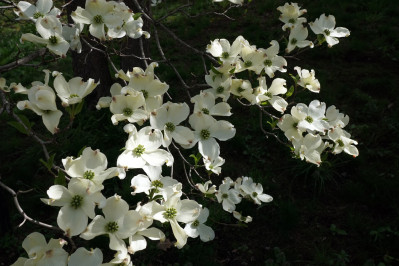
Look for four-petaled, showy bracts surrounding small flower clusters, opposite branching, and simple, oval leaves with noticeable veins. In fall, the tree produces red berries and vibrant foliage.
Dogwoods tolerate full sun in cooler climates, but in hot areas, they perform best with partial shade to avoid leaf scorch and stress. Some afternoon shade helps maintain blooms and overall health.
Last updated on Jun 30, 2026
Species suggested by: Patricia Ross, 2022
Plant Profile compiled and written by: Team PlantShare
Contributors: Team PlantShare
 Ask Us!

