



 Garden The PlantShare Way ®

~ All About Foxglove ~


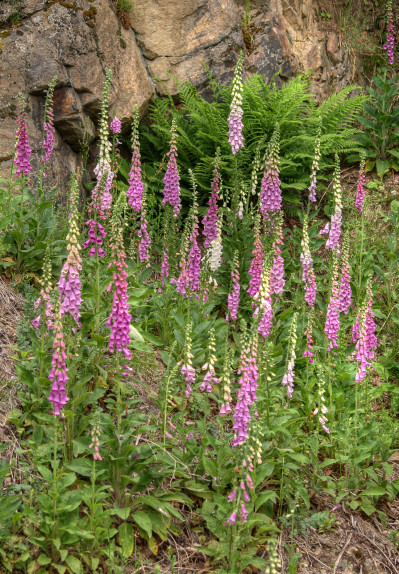
Foxgloves (Digitalis purpurea) are striking plants that bring vertical color and elegance to any garden. Easy growing conditions makes for 'easy wins' for beginners. These plants prefer partial shade to full sun, depending on your climate, and thrive in well-draining, humus-rich soil. Consistent moisture supports healthy growth, but avoid waterlogged soil to prevent root rot.
There are many Foxglove varieties to explore, ranging from classic purple spikes to soft pink, white, and yellow forms. Some varieties are biennial, but most commonly planted Foxgloves behave as a perennials, returning each year when given proper care. Choosing the right variety allows you to extend bloom times and create dynamic garden displays. In native climates like the PNW, they bred and self-seed too.
Foxgloves offer many plant uses or design options; they are excellent for cottage-style gardens, borders, lush 'forest' displays, and are pollinator-friendly to boot. Their tall spikes attract bees, hummingbirds, and other beneficial insects, adding life to your outdoor space. They are easy to transplant; the trick is to remove the larger basal leaves and keep them well watered as they settle into their new spot. They make dramatic flower arrangements too!
Due to their toxicity, foxgloves should be planted where pets and small children are unlikely to ingest them. However, they do not taste good, which is a great deterrent.
Foxglove flower care is simple: deadhead faded flowers to encourage additional blooms, and thin overcrowded seedlings to improve airflow. Mulching is ideal, but you can apply a balanced fertilizer in spring too. Remove weak or damaged leaves to prevent disease and when transplanting. Mulching around the base retains soil moisture and protects roots during hot weather.
A beautiful companion plant for foxgloves is the classic garden peony (Paeonia lactiflora). Peonies bloom in late spring to early summer, just before or alongside foxgloves, creating a layered display of large, fragrant flowers beneath the tall foxglove spikes. Their lush, bushy foliage also fills the lower part of the border, helping balance the vertical structure of foxgloves. Both plants enjoy similar conditions: fertile, well-draining soil and moderate moisture, making them easy to grow together. As the foxgloves begin to dominate the garden with height, peonies provide dense greenery and soft texture below, resulting in a harmonious and visually rich planting combination.
With the right conditions, proper placement, and attentive care, these elegant plants reward gardeners with dramatic spikes of color that brighten any garden. By exploring different Foxglove varieties and pairing them with companions like peonies, you can enjoy a mix of height, texture, and seasonal interest. Even beginners can successfully grow these captivating perennials with steady attention and care.
Digitalis purpurea, commonly known as Foxglove, is a biennial or short-lived perennial. It typically grows foliage in the first year and blooms in the second. Some varieties can behave as true perennials with proper care.
Plant Foxglove in well-draining soil rich in organic matter. Provide full sun to partial shade, keep the soil evenly moist, and space plants to allow air circulation. Fertilize lightly in spring and remove faded flower spikes to encourage longer bloom periods.
Yes. All parts of the foxglove plant are toxic if ingested. Handling the plant is safe, but ingestion can cause serious health issues.
Foxgloves usually bloom for 6–8 weeks, typically in late spring to early summer. Removing spent flowers can sometimes encourage a short second bloom.
Choose a location with partial shade or morning sun and well-draining soil. Foxgloves work well in borders, woodland gardens, or pollinator-friendly areas.
Most Foxglove plants reach 2–5 feet tall, though some varieties can grow up to 6 feet under ideal conditions.
Yes, Foxgloves tolerate partial shade and often thrive in woodland or filtered-light conditions. Full shade may reduce flowering.
Foxgloves are native to Europe, western Asia, and northwestern Africa. They grow in woodlands, meadows, and rocky slopes in these regions.
All parts are poisonous, including leaves, flowers, stems, and seeds. The leaves contain the highest concentration of toxic compounds.
Foxglove is found in Europe, parts of Asia, and North Africa, and it is widely cultivated in gardens worldwide.
Foxgloves grow best in USDA Zones 4–9. Some varieties may tolerate slightly colder or warmer zones with proper care.
Last updated on Jun 23, 2026
Species suggested by: Dina Russell, 2020
Plant Profile compiled and written by: Team PlantShare
Contributors: Team PlantShare
 Ask Us!