



 Garden The PlantShare Way ®

~ All About California Fuchsia ~


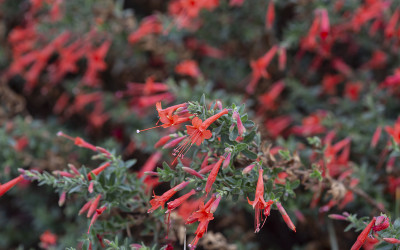
The California Fuchsia (Epilobium canum) is a vibrant, drought-tolerant perennial that adds brilliant color to gardens late in the season. Known for its bright red, trumpet-shaped flowers, it is a magnet for hummingbirds and an excellent choice for dry landscapes. Understanding proper California Fuchsia care ensures healthy growth and long-lasting blooms.
Plant California Fuchsia in full sun for the best flowering performance. It thrives in well-draining soil, such as sandy or rocky types, and can handle poor soil conditions. Water regularly during its first growing season to establish deep roots, then reduce watering in years 2 and 3 as it becomes drought-hardy. Overwatering should be avoided, as this can cause root problems.
Pruning is an important part of plant care. In late winter or early spring, cut the plant back to just a few inches above the ground. This encourages dense new growth and more abundant flowering in the summer and fall. Removing spent blooms during the season will also extend the flowering period.
This plant works beautifully as a ground cover. Its spreading habit helps stabilize slopes, fill bare garden spaces, and suppress weeds naturally. Once established, it forms a low, colorful mat that requires little maintenance. California Fuchsia pairs well with other drought-tolerant plants like salvias, penstemons, and ornamental grasses.
Blooming from mid-summer into fall, it provides a welcome splash of color when many other plants are fading. In coastal and Mediterranean climates, it can stay evergreen, while in colder areas it will die back and regrow in spring.
A strong companion plant for California Fuchsia is Muhlenbergia rigens, commonly known as Deer Grass. This ornamental grass features tall, arching stems and soft, feathery flower plumes that add height and movement to the garden. It thrives in the same sunny, well-drained, low-water conditions as California Fuchsia, making them highly compatible. The upright form and neutral tones of Deer Grass create a striking contrast with the low, spreading habit and bright red flowers of California Fuchsia. Together, they form a balanced and visually dynamic planting that combines texture, structure, and long seasonal interest.
With minimal care and thoughtful companion planting, California Fuchsia becomes a standout feature in water-wise gardens, offering both beauty and ecological value.
Last updated on Nov 16, 2026
Species suggested by: Catherine Ko, 2023
Plant Profile compiled and written by: Team PlantShare
Contributors: Team PlantShare
 Ask Us!