



 Garden The PlantShare Way ®
~ All About Sweet daphne ~


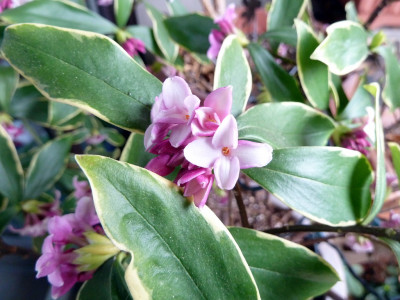
Daphne odora 'Aureomarginata' shrubs are well-loved for their intense fragrance, glossy leaves, and clusters of delicate blooms that appear in late winter or early spring. Learning proper plant care helps gardeners build healthy, long-lasting plants that reward the garden with color and scent when most other shrubs are still dormant. Daphne grows best in partially shaded areas with rich, well-draining soil. These shrubs dislike waterlogged ground, so planting them in raised beds or sloped areas can help keep roots healthy and prevent decline.
Gardeners can choose from many varieties, each offering unique colors, sizes, and growth habits. Some feature pink, white, or purple flowers, while others have variegated leaves that brighten shady spots. Many popular types are evergreen, making them valuable for year-round texture and interest in mixed borders or foundation plantings.
Understanding ideal growing conditions of Daphne odora 'Aureomarginata' is essential for long-term success. It prefers cool roots, moderate moisture, and protection from harsh afternoon sun. Adding mulch around the base helps regulate soil temperature and hold moisture without letting the soil stay soggy. Light feeding in spring supports new growth, but avoid heavy fertilizing, which can stress the plant.
For gardeners interested in expanding their collection, propagating Daphne odora 'Aureomarginata' can be rewarding, though it requires patience. Semi-hardwood cuttings taken in summer root most reliably. Using a rooting hormone and keeping the cuttings in a humid, shaded environment increases the chances of success.
Regular care also includes pruning the plant lightly to maintain shape. Trim after flowering, removing dead or damaged branches and shaping the plant without cutting into old wood.
A beautiful companion plant for Daphne is Hosta sieboldii. This shade-loving perennial features large, textured blue-green leaves that create an attractive contrast with the glossy foliage of Daphne shrubs. Both plants thrive in partial shade and appreciate moist, well-draining soil enriched with organic matter. Planting Hosta sieboldii nearby helps create a layered garden design, with Daphne odora 'Aureomarginata' providing fragrant blooms above while the hosta forms a lush ground layer beneath. Together they produce a balanced combination of fragrance, foliage texture, and shade tolerance, making them an excellent pairing for woodland gardens or shaded borders.
Prune it right after it finishes flowering in late winter or early spring. This timing allows the plant to set new buds for the next season without losing future blooms.
Make light cuts only. Remove dead, damaged, or crossing branches first. Then, trim back long or uneven stems to shape the plant. Avoid cutting into old, thick wood because it does not regrow well.
Choose a spot with partial shade, such as morning sun and afternoon shade. The soil should drain very well but still hold some moisture. Plant it where the roots stay cool—near larger shrubs or with mulch around the base works well. A sheltered location away from strong winds helps protect the flowers and leaves.
Yes, all parts of Daphne plants are poisonous to humans and pets. The berries are especially toxic if eaten. The sap can also irritate the skin, so gloves are helpful when handling or pruning the plant.
Dig a hole slightly wider than the root ball but no deeper. Set the plant so the top of the root ball sits level with the soil surface. Backfill with well-draining soil and firm it gently. Water to settle the soil, then add a light layer of mulch to keep the roots cool. Avoid planting too deeply, as Daphne dislikes buried stems.
Last updated on Jun 09, 2026
Species suggested by: Dina Russell, 2024
Plant Profile compiled and written by: Team PlantShare
Contributors: Team PlantShare
 Ask Us!