



 Garden The PlantShare Way ®
~ All About Jackman's clematis ~


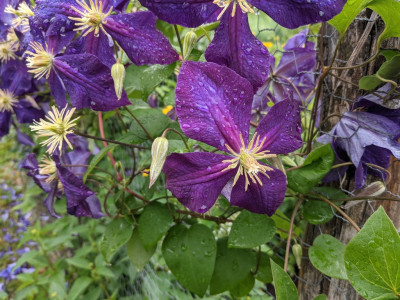
Clematis x jackmanii is one of the most popular flowering vines in home gardens, prized for its large, deep purple blooms and reliable performance. This vigorous climber adds instant vertical interest to fences, trellises, pergolas, and walls. With the right care, even beginner gardeners can enjoy a healthy, long-flowering plant.
Start by choosing a sunny location. Clematis x jackmanii prefers at least six hours of direct sunlight each day, while its roots stay cooler when shaded by mulch or low-growing plants. Plant it in rich, well-draining soil and water it deeply on a regular basis, especially during dry weather. Consistent moisture supports strong growth and helps the vine develop better flowers.
Understanding Clematis x jackmanii bloom time helps you plan your garden’s color. This variety usually flowers from mid-summer to early fall, making it a standout when many other plants begin to fade. The blooms form on new growth, which is an important detail when it comes to pruning.
Proper pruning is simple. Since it blooms on new wood, prune it back hard in late winter or early spring. Cut the stems down to about 12–18 inches above the ground, just above strong leaf buds. This encourages fresh shoots that will carry abundant flowers during the growing season. Do not worry about overpruning — this plant responds well to bold trimming.
Feed your Clematis x jackmanii with a balanced fertilizer in spring, provide support for climbing, and enjoy a dramatic display of color year after year.
A classic companion plant for this vine is a climbing rose. Gardeners often grow clematis and climbing roses on the same tellis because they complement each other in many ways. While the rose provides sturdy structure and early-season blooms, the clematis weaves through the branches of the rose, extending the flowering season with its rich purple blossoms later in summer. Both plants enjoy sunny conditions and fertile, well-drained soil, making them naturally compatible. When trained on the same trellis or arbor, the combination creates a layered display of color, texture, and fragrance that adds romantic charm and vertical beauty to the garden.
Prune this clematis in late winter or very early spring, before new growth starts. It blooms on new stems, so early pruning helps it grow fresh shoots that will produce flowers.
Cut all main stems back to about 12–18 inches from the ground. Make each cut just above a healthy leaf bud. Remove weak or dead growth so the plant can focus on strong new stems.
The easiest method is stem cuttings. In early summer, cut a healthy green stem about 4–6 inches long. Remove the lower leaves, plant it in moist potting soil, and keep it in a warm, lightly shaded area until it develops roots.
Yes, it is a hardy perennial vine. With basic care, it comes back every year and often gets bigger and fuller over time.
Last updated on Jun 18, 2026
Species suggested by: RhondaDT, 2024
Plant Profile compiled and written by: Team PlantShare
Contributors: Team PlantShare & RhondaDT
 Ask Us!

