



 Garden The PlantShare Way ®
~ All About Mrs Robb’s bonnet ~

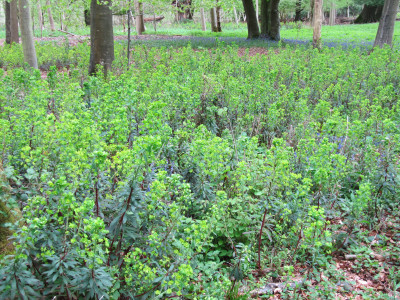
Evergreen Euphorbia is a striking, low-maintenance plant that brings year-round structure and color to the garden. One of the most popular varieties is Euphorbia amygdaloides subsp. robbiae, often chosen for its glossy green leaves and bold, chartreuse flower heads that appear in spring. This plant works well as ground cover, for borders, or as a shade-tolerant filler beneath trees and shrubs.
Understanding proper Euphorbia amygdaloides subsp. robbiae care starts with choosing the right spot. This plant prefers partial to full shade, although it can handle some morning sun. It grows best in well-draining soil and does not like to sit in wet conditions. Once established, it is very drought-tolerant, making it a smart choice for low-water gardens and difficult areas.
When it comes to growing Euphorbia, less is often more. Water the plant regularly during its first season to help establish strong roots. After that, only occasional watering is needed. Fertilizer is usually not necessary, and too much feeding can cause weak, floppy growth. Trim back old flower stems in late summer to keep the plant looking tidy and to encourage fresh foliage.
For companion planting, Polygonatum odoratum, commonly known as Solomon’s seal, is a suitable choice for shaded garden areas. This perennial thrives in partial to full shade and prefers well-draining soil with moderate moisture. Its gently arching stems and dangling, bell-shaped white flowers bring an elegant, woodland character to the planting area. The soft, flowing form of Solomon’s seal contrasts with the upright, structured growth of Euphorbia amygdaloides subsp. robbiae. When grown together, Solomon’s seal lifts your design with graceful foliage while Euphorbia provides dense evergreen coverage and bright spring color.
Gardeners should also be aware that this variety has invasive tendencies that can occur in ideal conditions. It spreads by underground roots and can move into nearby spaces if not controlled. To manage its growth, use edging, plant it in contained areas, or remove unwanted shoots as they appear.
IMPORTANT: Always wear gloves when handling Euphorbia. The milky sap can irritate skin and eyes.
With proper placement and simple care, Euphorbia amygdaloides subsp. robbiae can provide reliable beauty and structure in your garden for many years.
Yes, it is a perennial plant. It stays in the garden year after year and keeps its leaves in most climates.
Plant it in a shady or partly shaded area. Use soil that drains well. Water it until the roots settle in, then reduce watering. Once established, it can handle dry spells.
The easiest way is by dividing the plant. In spring or fall, dig up a section of the clump, separate it carefully, and replant it in another spot.
It grows best in loose, well-draining soil. Slightly sandy or loamy soil is ideal, and it does not like soggy, heavy ground.
Last updated on Jun 26, 2026
Species suggested by: Dina Russell, 2020
Plant Profile compiled and written by: Team PlantShare
Contributors: Team PlantShare
 Ask Us!

