



 Garden The PlantShare Way ®
~ All About Mediterranean spurge ~


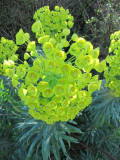
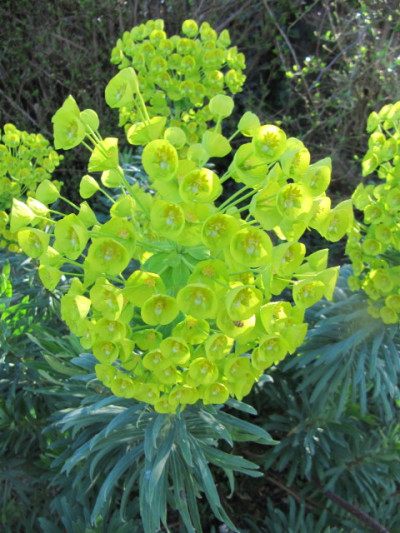
The Mediterranean spurge plant (Euphorbia characias) is a striking evergreen perennial that brings bold structure and year-round interest to the garden. Native to southern Europe, it thrives in sunny, dry conditions and is valued for its tall, upright stems topped with clusters of chartreuse-green flowers. Its blue-green foliage provides texture even when not in bloom, making it a reliable choice for borders, rock gardens, and drought-tolerant landscapes.
Successful Euphorbia characias care begins with choosing the right location. This plant prefers full sun but can tolerate partial shade, especially in hotter regions. Well-drained soil is essential, as the roots do not handle waterlogged conditions. Once established, it is highly drought-resistant, requiring only occasional watering during long dry spells. Beginners will appreciate its toughness and ability to thrive with minimal attention.
Pruning is another key part of Euphorbia characias care. After the flowers fade in late spring or early summer, cut back the spent stems to the base. This encourages new shoots to develop and keeps the plant looking fresh. Always wear gloves when handling euphorbia, as the milky sap can irritate skin. Mulching in spring helps conserve soil moisture and suppress weeds, though the plant generally does well without heavy feeding or constant maintenance.
The Mediterranean spurge plant is not only attractive but also useful in garden design. Its architectural form pairs well with ornamental grasses, lavender, or other drought-tolerant plants. It is also deer- and rabbit-resistant, making it a dependable choice for areas where browsing animals are a problem.
With its bold flowers, evergreen foliage, and minimal needs, Euphorbia characias is an excellent perennial for gardeners who want lasting impact with little effort. By understanding its preferred conditions and basic pruning routine, you can enjoy its beauty for many years.
Euphorbia characias is hardy in mild climates but can struggle in very cold winters. In USDA Zones 7–10, it usually survives without help. In colder regions, it benefits from mulching around the base or planting in a sheltered spot to protect it from frost damage.
This plant does not live as long as some perennials. Most clumps stay attractive for three to five years before they begin to thin out. At that point, you can replace them with new plants or take cuttings to start fresh. Division is not usually needed, since it grows from woody stems rather than spreading roots.
Euphorbia characias grows best in well-drained soil. Sandy or gravelly soils are ideal, but it will also adapt to average garden soil if drainage is good. Heavy clay or waterlogged ground should be avoided because it can cause root rot.
This plant pairs well with other drought-tolerant species. Lavender, rosemary, and ornamental grasses create a Mediterranean look that highlights its upright form. It also contrasts beautifully with silver-leaved plants like artemisia or the soft textures of lamb’s ear (Stachys byzantina). These combinations add both color and texture to borders or dry gardens.
Last updated on Jul 15, 2026
Species suggested by: Dina Russell, 2020
Plant Profile compiled and written by: Team PlantShare
Contributors: Team PlantShare
 Ask Us!