



 Garden The PlantShare Way ®
~ All About Joyweed ~

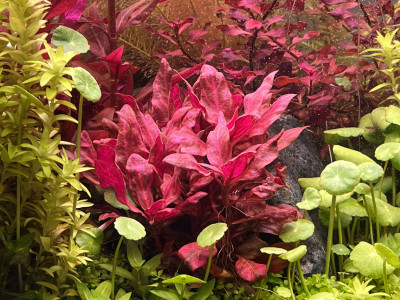
Alternanthera reineckii is a popular aquatic plant prized for its vibrant red and purple leaves. It is commonly used in freshwater aquariums to create striking contrast and visual depth. With proper care, even beginners can maintain a healthy, colorful display that thrives in underwater environments.
The first step in Alternanthera reineckii care is providing adequate light. This plant requires medium to high lighting to develop its full red coloration. Insufficient light can cause leaves to fade to green and slow growth. Consider using LED aquarium lights or fluorescent bulbs designed for plant growth to meet its needs.
Nutrient-rich water is also important. Plant care involves regular fertilization with liquid or substrate fertilizers to supply essential nutrients such as iron, potassium, and trace elements. A nutrient-rich substrate supports root development and ensures the plant grows robustly.
CO2 supplementation can further enhance growth and color, especially in densely planted aquariums. While optional, adding CO2 can accelerate leaf development and keep the plant healthy in high-light conditions.
Pruning is another key aspect of Alternanthera reineckii care. Trim older leaves and pinch growing tips to maintain a compact, bushy appearance. This encourages new shoots to develop and prevents the plant from overshadowing smaller companions.
A great companion plant for Alternanthera reineckii is Rotala rotundifolia. This graceful stem plant produces slender green to pinkish leaves and grows in delicate clusters that create a soft, flowing appearance in aquascapes. Rotala rotundifolia thrives in similar conditions, including moderate to strong lighting and nutrient-rich water, making it easy to grow alongside Alternanthera. The lighter tones and fine texture of Rotala contrast beautifully with the bold, broad red leaves of Alternanthera reineckii, helping create depth and visual balance in planted aquariums.
By combining proper lighting, regular fertilization, pruning, and stable water conditions, aquarists can enjoy a thriving aquatic garden. Pairing Alternanthera reineckii with complementary plants like Rotala rotundifolia adds texture, color variation, and a more natural look to any freshwater aquarium setup.
Yes, Alternanthera reineckii can grow outdoors, but only in warm climates where temperatures stay consistently above 68°F (20°C). It is sensitive to cold and cannot survive frost. In tropical or subtropical regions, it can be grown outdoors in ponds, water gardens, or very moist soil.
Yes, Alternanthera reineckii can grow emersed (out of the water). When grown above water, the leaves may look slightly different—typically thicker and sometimes greener—but the plant will still thrive as long as humidity remains high and the soil stays consistently moist. It cannot tolerate drying out.
No, the flowers only grow on the tips of stems that have reached above the surface of the water.
It is moderately challenging for beginners. While hardy, it requires proper lighting, nutrients, and sometimes CO2 to maintain its vibrant color and healthy growth.
No, under low light, the red coloration fades and leaves may turn green. High to medium lighting is necessary to preserve the deep red hues.
Slow growth or color loss can result from insufficient light, poor nutrient levels, or low CO2. Stable water conditions and adequate fertilization help prevent these issues.
It usually takes 1–3 weeks for the plant to adjust. During this time, some leaves may yellow or melt, which is normal as it acclimates to light, nutrients, and water parameters.
Leaf melting happens when the plant experiences stress from transplanting, water chemistry changes, or sudden light shifts. New leaves typically grow healthy once the plant stabilizes.
It can grow 8–16 inches tall in aquariums, depending on light and nutrient conditions. Regular pruning helps maintain a bushy, compact appearance and encourages vibrant new growth.
Last updated on Jun 13, 2026
Species suggested by: Team PlantShare, 2024
Plant Profile compiled and written by: Team PlantShare
Contributors: Team PlantShare
 Ask Us!

