



 Garden The PlantShare Way ®

~ All About San Pedro Cactus ~


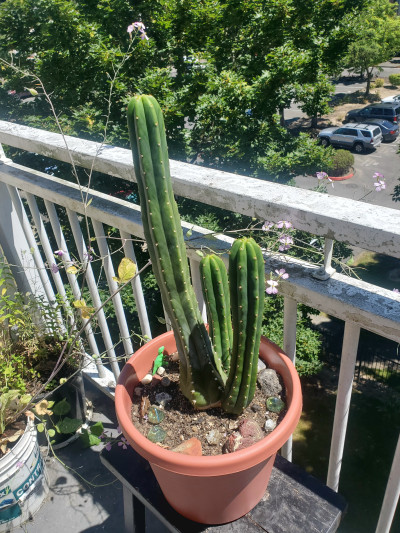
The San Pedro cactus (Echinopsis pachanoi) is an impressive, fast-growing plant that thrives with minimal care, making it a great choice for gardeners who appreciate drought-tolerant, low-maintenance species. Native to the Andes Mountains, this columnar cactus is prized for its tall, striking form and rapid growth under the right conditions.
When growing San Pedro cactus, choose a location with plenty of bright, indirect sunlight or partial direct sun. These cacti thrive in warm, dry climates, and too much shade can slow growth. If growing indoors, place the plant near a sunny south-facing window to ensure it receives enough light.
Soil is crucial for success. Use a well-draining cactus or succulent mix, or make your own with sand, perlite, and regular potting soil. Proper drainage prevents root rot, which is the most common problem when growing San Pedro cactus. Water sparingly during the growing season, allowing the soil to dry out completely between waterings. Reduce watering significantly in winter when the cactus enters dormancy.
Fertilizing lightly with a balanced, water-soluble fertilizer during spring and summer can encourage strong growth. Avoid over-fertilizing, as this can damage roots and stunt development.
Propagation is simple with cuttings. Allow a fresh cutting to callus over for a few days before planting in dry, well-draining soil. Rooting can take several weeks, and the new plant will grow quickly once established.
A suitable companion plant for the San Pedro cactus is Opuntia basilaris, commonly known as the beavertail cactus. This low-growing cactus features broad, paddle-shaped pads and vibrant pink to magenta flowers. Because it thrives in similar sunny, dry conditions and well-draining soil, it pairs naturally with San Pedro in desert gardens or xeriscapes. The upright columns of the San Pedro cactus contrast with the spreading form of beavertail cactus, creating visual balance and texture in arid landscapes.
With proper sunlight, careful watering, and well-draining soil, San Pedro cactus can become a dramatic and long-lived feature in both indoor collections and outdoor desert-style gardens. Paired with compatible companion plants like Opuntia basilaris, it helps create a striking, low-maintenance display that celebrates the beauty of drought-tolerant plants.
San Pedro cactus is native to the Andes Mountains in South America, particularly in Peru and Ecuador. It thrives in high-altitude, semi-arid regions with well-draining soil.
Plant it in well-draining soil, ideally a mix of sand, perlite, and potting soil. Provide bright, indirect light or partial direct sun. Water sparingly during the growing season and even less in winter. Fertilize lightly during spring and summer, and propagate easily from cuttings after allowing them to callus.
San Pedro cactus can grow 10–20 feet tall outdoors in optimal conditions. In pots, it generally reaches 4–6 feet, depending on container size and care.
San Pedro cactus prefers full sun to partial sun. Outdoors, 6–8 hours of direct sunlight per day promotes strong, healthy growth. Indoors, place it near a south-facing window or under bright grow lights.
Last updated on Nov 15, 2026
Species suggested by: Dina Russell, 2025
Plant Profile compiled and written by: Team PlantShare
Contributors: Team PlantShare
 Ask Us!