



 Garden The PlantShare Way ®
~ All About Golden Pothos ~


Golden Pothos (Epipremnum aureum) is one of the easiest houseplants for beginners. Known for its trailing vines and attractive heart-shaped leaves, this plant adapts well to a variety of indoor environments. Understanding its plant care can help you grow a healthy plant that thrives for years.
Successful growing Golden Pothos starts with choosing the right location. One of the most important factors is meeting its light requirements. Pothos grows best in bright, indirect light, although it can tolerate lower light conditions. Variegated varieties typically maintain stronger leaf patterns when they receive more indirect sunlight. Avoid prolonged exposure to harsh direct sun, which can scorch the foliage.
Watering is simple. Allow the top inch of soil to dry before watering again. Overwatering is one of the most common mistakes and can lead to root rot. Plant pothos in a container with drainage holes and use a well-draining potting mix to promote healthy root development.
One reason many gardeners enjoy Golden Pothos is the ease of its propagation. Simply cut a healthy vine below a leaf node and place the cutting in water or moist soil. Within a few weeks, roots will begin to form. This simple propagation method allows you to create new plants for your home or share them with friends.
There are also several notable plant benefits. Epipremnum aureum grows quickly, requires minimal maintenance, and adds attractive greenery to indoor spaces. Its cascading vines work beautifully in hanging baskets, on shelves, or trained along supports. In addition, Golden Pothos can help create a more inviting indoor environment by bringing a natural element into homes and offices.
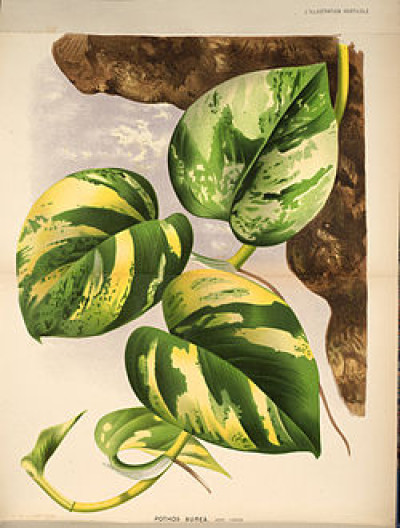
Dracaena trifasciata, commonly known as the Snake Plant, complements Golden Pothos in indoor plant containers. The Snake Plant's upright, sword-like foliage contrasts with the cascading vines of Epipremnum aureum, creating an appealing mix of height and texture. Use a marbled Pothos sporting green, chartruese and yellow in their leaves and you've successfully added color to your design. Both plants tolerate bright, indirect light and adapt well to lower-light indoor environments, the usual conditions in homes and offices. Because Dracaena trifasciata prefers the soil to dry out more thoroughly between waterings than Golden Pothos, they are best grown in separate pots while displayed together in the same container. This arrangement allows each plant to receive the appropriate level of moisture while creating a balanced, low-maintenance indoor display.
With proper plant care, suitable lighting, and occasional pruning, Golden Pothos remains one of the most dependable and beginner-friendly houseplants available. Its adaptability, beauty, and ease of propagation make it a favorite among indoor gardeners.
Golden Pothos grows best in bright, indirect light. It can also survive in medium or low light, which makes it a popular houseplant. However, low light may slow growth and reduce leaf variegation. Avoid strong direct sunlight, as it can burn the leaves.
Golden Pothos is easy to maintain. Place it in a spot with indirect light, use well-draining potting soil, and water when the top layer of soil feels dry. Trim long vines occasionally to keep the plant full and encourage new growth. Wipe dust from the leaves to help them absorb light efficiently.
Most Pothos plants need water about every 1–2 weeks, depending on temperature, humidity, and light levels. Always check the soil first. Water thoroughly when the top 1–2 inches of soil feel dry, then allow excess water to drain away.
Golden Pothos prefers temperatures between 65°F and 85°F (18°C to 29°C). It can handle slightly cooler conditions for short periods, but temperatures below 50°F (10°C) may damage the plant. Keep it away from cold drafts and sudden temperature changes.
Pothos earned the nickname "Devil's Ivy" because it is extremely difficult to kill. The plant stays green and continues growing even when conditions are less than ideal. Its vigorous vines and ability to recover from neglect have made it famous for being one of the toughest houseplants to kill, the very easiest to grow and learn from. This plant is a great teacher!
Last updated on Jul 10, 2026
Species suggested by: Dina Russell, 2026
Plant Profile compiled and written by: Team PlantShare
Contributors: Team PlantShare
 Ask Us!

