



 Garden The PlantShare Way ®

~ All About Japanese Forest Grass ~


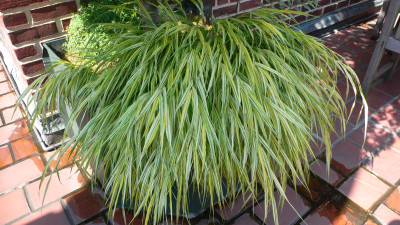
Japanese forest grass, scientifically known as Hakonechloa macra, brings soft movement and elegant texture to shaded gardens. Its arching, bamboo-like blades form a low, flowing mound that looks striking along paths, under trees, or spilling over container edges. With the right plant care, even beginners can enjoy this plant for many years.
This ornamental grass thrives in partial to full shade. Gentle morning sun works well, but harsh afternoon light can scorch the leaves, especially on golden varieties. Choose a location protected from strong winds, since the fine blades can dry out quickly. Rich, well-drained soil helps the plant establish faster and keep its vibrant color through the season. Adding compost before planting improves both drainage and nutrients.
Water plays a key role in successful Japanese forest grass care. Keep the soil consistently moist, especially during the first growing season and during hot weather. Avoid letting the soil stay soggy. Overwatering can cause root problems and weaken the plant. A layer of mulch helps hold moisture and keeps the roots cool.
As a companion plant, Brunnera macrophylla is an excellent match for Hakonechloa macra. Often called Siberian bugloss, Brunnera features large, heart-shaped leaves and small, sky-blue spring flowers that resemble forget-me-nots. Like Hakonechloa macra, it prefers partial shade and moist, well-drained soil. The bold foliage of Brunnera provides strong contrast to the fine, cascading blades of Hakonechloa, creating a balanced and visually rich planting combination that remains attractive throughout the growing season.
Hakonechloa macra grows slowly, but that steady pace makes it easy to manage. It usually reaches 12–18 inches tall and slightly wider. In early spring, cut back any dead or flattened foliage to make room for new growth. Fresh green shoots will soon appear from the base.
This grass pairs beautifully with hostas, ferns, and coral bells. Its graceful shape adds contrast beside broad-leaf plants and flowering perennials. Whether planted in garden beds or decorative containers, Hakonechloa macra offers year-round interest through its form, even after the foliage fades in late fall. With consistent watering, good soil, and a shady spot, proper plant care will reward you with a stunning, low-maintenance ground feature.
Yes, it does. As the weather cools, the leaves often turn soft shades of gold, orange, or copper. This color change adds a warm, glowing look to shaded areas in fall. Once winter arrives, the foliage fades and goes dormant.
Mulching is a good idea. A thin layer of mulch helps keep the soil moist, protects the roots from heat and cold, and reduces weeds. Use natural mulch like bark or compost, and keep it slightly away from the plant’s base to prevent rot.
This plant does not need much feeding. One light application of a balanced, slow-release fertilizer in early spring is enough. Too much fertilizer can cause weak growth and dull leaf color.
Most plants reach about 12 to 18 inches (30 to 45 cm) in height. They usually spread to about 18 to 24 inches (45 to 60 cm) wide. It grows slowly and keeps a neat, rounded shape.
Last updated on Nov 11, 2026
Species suggested by: Dina Russell, 2020
Plant Profile compiled and written by: Team PlantShare
Contributors: Team PlantShare
 Ask Us!