



 Garden The PlantShare Way ®

~ All About Bugleherb ~


Ajuga reptans is a versatile, low-growing plant that makes an excellent addition to any garden. Its dense foliage and vibrant flowers make it ideal for gardeners seeking both color and practicality. Understanding its plant care helps ensure this perennial thrives year after year with minimal effort.
When planting Ajuga reptans, choose a location with partial shade to full sun and well-draining soil. While it tolerates a wide range of soil types, it performs best in moist, fertile conditions. Space plants about 6 to 12 inches apart to allow natural spreading and reduce the risk of overcrowding, which can encourage disease. Once established, it fills in quickly and requires little ongoing attention.
One of the key benefits of using Ajuga reptans as ground cover is its ability to suppress weeds while adding visual interest. Its fast-spreading growth forms dense mats that stabilize soil and create a lush carpet, making it especially useful along borders, pathways, or beneath trees where turf grass struggles.
In shaded garden areas, Pachysandra terminalis works well as a companion or alternative. Its glossy evergreen foliage and slower, more controlled spread complement Ajuga’s colorful leaves and spring flowers, allowing gardeners to blend textures while keeping maintenance low.
Another excellent companion plant is Iris cristata, commonly known as dwarf crested iris. This woodland perennial thrives in similar conditions, preferring partial shade and moist, well-drained soil. Its soft blue or lavender flowers bloom in early spring, adding seasonal color before Ajuga reaches full growth. The delicate, upright foliage of Iris cristata contrasts nicely with Ajuga’s spreading habit, creating a layered, natural look in woodland beds and shaded borders.
Ajuga reptans propagation is simple through division or rooting stolons. Dividing established clumps in early spring or fall refreshes growth and helps control spread. Regularly removing damaged foliage and providing moderate water during dry periods keeps plants healthy.
With proper care and thoughtful companion planting, Ajuga reptans becomes a reliable, attractive ground cover that enhances both structure and color in the garden year-round.
Ajuga reptans can spread quickly through stolons, forming dense mats. While it’s not aggressively invasive, it can take over garden beds if not managed, so occasional thinning is recommended.
Ajuga reptans grows best in partial shade to full sun and well-draining soil. Plant clumps a few inches apart, water moderately, and allow stolons to spread naturally. Mulch can help retain soil moisture and suppress weeds.
Yes, Ajuga reptans is generally deer resistant. Most deer avoid its slightly bitter leaves, making it a reliable choice for gardens where deer are a concern.
Yes, Ajuga reptans evergreen foliage stays vibrant throughout the year, providing continuous ground cover and garden interest even in winter months.
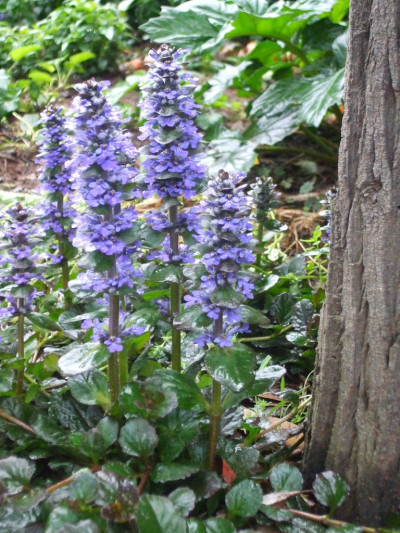
Ajuga reptans typically blooms in late spring to early summer. Its spikes of blue, purple, or pink flowers last a few weeks, attracting pollinators like bees and butterflies.
The best time for planting Ajuga is spring or early fall. This allows plants to establish roots before extreme temperatures arrive, ensuring healthier growth.
No, Ajuga reptans is not considered edible. While it is non-toxic for humans in small contact, it is grown solely as an ornamental ground cover.
To remove Ajuga reptans from lawns, dig up the plants carefully, ensuring stolons and roots are removed. Repeat removal if necessary and restore grass seed or sod to prevent regrowth.
Ajuga propagation is easy via division or rooting stolons. Divide established clumps in spring or fall, or plant stolons in moist soil to grow new plants.
Transplant Ajuga reptans by digging up established clumps with roots intact. Replant in a prepared bed with good soil and water well to help them recover.
No, Ajuga reptans is generally considered non-toxic to dogs. However, it’s best to prevent pets from eating large amounts of any plant to avoid mild digestive upset.
Last updated on Aug 02, 2026
Species suggested by: Dina Russell, 2020
Plant Profile compiled and written by: Team PlantShare
Contributors: Team PlantShare
 Ask Us!