



 Garden The PlantShare Way ®

~ All About Fragrant Solomon's Seal ~


Solomon’s seal, scientifically known as Polygonatum odoratum, is a graceful perennial valued for its arching stems, delicate white flowers, and lush green foliage. This shade-loving plant fits perfectly into woodland gardens, shaded borders, or areas where sun-loving perennials fail to thrive. With proper care, it delivers understated beauty and reliable performance year after year.
Polygonatum odoratum thrives in partial to full shade, closely matching its natural woodland environment. It prefers rich, well-drained soil amended with organic matter such as compost or leaf mold. Moist but not waterlogged soil helps the rhizomes establish strong roots. A layer of mulch keeps the soil cool, conserves moisture, and limits weed growth, which is especially helpful in shaded settings.
When planting, space rhizomes about 12 to 18 inches apart to allow the plant to spread naturally. Growth is steady rather than aggressive, forming elegant clumps over time. This makes it ideal for gardeners who appreciate a relaxed, naturalistic look rather than fast coverage.
Care remains minimal once established. Remove damaged foliage in early spring, then allow the plant to grow undisturbed through the season. In autumn, let stems yellow and die back naturally before cutting them down. During prolonged dry spells, occasional watering supports healthy growth, though mature plants handle short droughts well.
In woodland garden design, Hosta sieboldiana and Hosta sieboldii make excellent companion plants. Both hostas thrive in similar shade and soil conditions. Their broad, textured leaves contrast beautifully with the slender, arching form of Solomon’s seal, adding visual depth and structure to shaded beds.
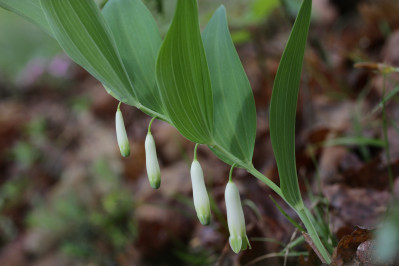
In late spring to early summer, Polygonatum odoratum produces small, fragrant, bell-shaped white flowers that dangle beneath the stems and attract pollinators. With its low-maintenance nature, elegant form, and compatibility with classic shade plants, Solomon’s seal remains a reliable and rewarding choice for beginner gardeners.
Yes, Polygonatum odoratum can be grown in containers. Use a large pot with good drainage and rich, well-drained soil. Keep the container in partial to full shade and water regularly to maintain consistent moisture.
Yes, Solomon’s Seal produces small, bell-shaped white flowers that hang gracefully beneath the arching stems. The flowers have a mild, sweet fragrance that attracts pollinators like bees.
Mature plants typically reach 2 to 3 feet tall and spread about 2 feet wide. Over time, they form clumps that slowly expand, creating a graceful, arching display in shaded garden areas.
Solomon’s Seal prefers consistently moist soil, especially during establishment. Water regularly during dry periods, but avoid waterlogged soil. Once established, it tolerates occasional short droughts, though consistent moisture encourages healthier growth and larger, more elegant stems.
Last updated on Nov 15, 2026
Species suggested by: Dina Russell, 2020
Plant Profile compiled and written by: Team PlantShare
Contributors: Team PlantShare
 Ask Us!