



 Garden The PlantShare Way ®
~ All About Lily of the valley ~


Lily of the valley, scientifically known as Convallaria majalis, is one of the most charming spring flowers, known for its delicate white bells and sweet fragrance. Gardeners often use it as ground cover because it spreads quickly through underground rhizomes. Over time, it forms dense clusters of green leaves and flowers that brighten shady corners where few other plants thrive. This makes it an excellent choice for filling in woodland gardens or shaded borders.
For those with limited space, planting Convallaria majalis in pots is a practical option. Containers help control its spread and allow you to enjoy the blooms on patios or balconies. Use a rich, well-draining soil mix and keep the soil evenly moist. Potted plants benefit from regular watering since containers dry out faster than garden beds. In colder climates, move pots to a sheltered spot during winter to protect the rhizomes.
Basic Convallaria majalis care is simple, making it a beginner-friendly plant. It prefers partial to full shade, moist soil, and protection from direct, hot sunlight. Once established, it requires little attention, though dividing clumps every few years helps prevent overcrowding and encourages better flowering. Mulching around the plants can also help retain soil moisture and improve growth.
For companion planting, Cornus florida, commonly called flowering dogwood, works beautifully as a canopy above Convallaria majalis. Cornus florida thrives in partial shade and rich, well-drained soil, providing a lovely backdrop of spring blooms and arching branches under which the lily of the valley flourishes. Its seasonal flowers and textured foliage enhance the woodland garden feel while giving the ground-hugging Convallaria majalis a visually striking complement.
Although historical references mention medicinal uses, Convallaria majalis is highly toxic if ingested and should not be used without medical supervision. Today, gardeners grow it purely for ornamental value, and pairing it with shade-tolerant trees like Cornus florida creates a harmonious, low-maintenance, and visually appealing garden display.
Yes. Lily of the valley is poisonous if eaten. All parts of the plant, including the red berries, contain toxic compounds that can affect the heart. It should be kept away from pets and children.
Plant lily of the valley rhizomes, also called pips, in moist, well-drained soil. They do best in partial to full shade. Keep the soil evenly damp, especially during dry spells. Once established, they need little care and will return each spring.
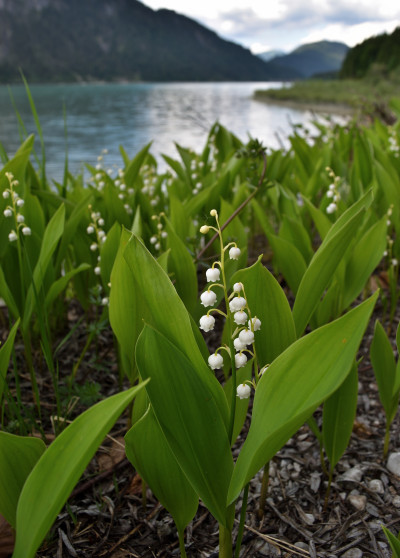
Lily of the valley has broad green leaves and short stems lined with small, white, bell-shaped flowers. The blooms hang downward and give off a strong, sweet fragrance in spring. Later, the plant produces bright red berries.
Yes, in some regions it can be invasive. The plant spreads quickly through underground rhizomes and may take over garden beds if not controlled. Using barriers or planting in contained areas can help keep it in check.
Choose a shaded or partially shaded spot with rich, moist soil. They work well under trees, along shaded borders, or in woodland gardens. Avoid planting them too close to delicate plants, since lily of the valley spreads quickly and can dominate the area.
Last updated on Jun 21, 2026
Species suggested by: Dina Russell, 2020
Plant Profile compiled and written by: Team PlantShare
Contributors: Team PlantShare
 Ask Us!

