



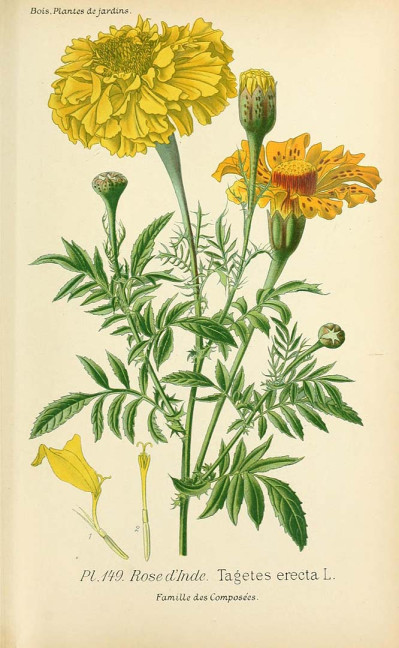
Red Tagetes

 Garden The PlantShare Way ®

~ All About Mexican Marigold ~


African marigolds (Tagetes erecta) are popular garden flowers known for their large, vibrant blooms and easy-growing nature. For new gardeners, learning the basics of plant care ensures healthy plants that brighten up beds, borders, and containers all season long.
These African marigolds thrive in full sun and well-drained soil. When planting, space them about 10 to 12 inches apart to allow good airflow. Regular watering is important, especially during hot spells, but avoid waterlogged soil. Deadheading spent blossoms encourages new flowers and keeps plants looking fresh. Fertilize lightly every few weeks with a balanced blend to support steady growth.
One of the biggest African marigold benefits is their ability to repel pests. Their strong scent naturally deters nematodes and some harmful insects, making them useful as companion plants in vegetable gardens. They also attract pollinators like bees and butterflies, which help improve overall garden health. Beyond pest control, their bold colors, ranging from gold to orange, add instant cheer to any space.
African marigolds make excellent companions for Phaseolus vulgaris, commonly known as common beans. When planted nearby, marigolds help protect bean plants from soil-dwelling pests and insects that can damage roots and foliage. In return, bean plants enrich the soil by fixing nitrogen, which supports healthy marigold growth. This mutually beneficial pairing improves plant vigor while reducing the need for chemical pest control.
Many beginners ask if African marigolds last year after year. Technically, they are not true perennial plants; they are grown as annuals in most regions. However, in warm, frost-free climates, they may reseed themselves and return the following season. For most gardeners, replanting each spring is the best approach.
With simple plant care, these plants reward you with months of blooms. Use them to line pathways, fill flowerbeds, or accent vegetable patches. Their reliable growth, natural pest-fighting properties, and long-lasting blossoms make them a perfect choice for beginner gardeners who want both beauty and function in their outdoor spaces.
African marigolds usually grow 1 to 3 feet tall. Some varieties can reach up to 4 feet if conditions are ideal.
The scientific name of the African marigold is Tagetes erecta. Other Marigold types, like French marigolds, have different names such as Tagetes patula.
Plant Tagetes in full sun and well-drained soil. Sow seeds or transplant seedlings after the last frost. Space them properly to allow airflow, water regularly, and remove faded flowers to keep them blooming longer.
Water Marigolds when the top inch of soil feels dry. In hot weather, they may need water two to three times a week. Avoid overwatering, as soggy soil can lead to root problems.
Last updated on Nov 15, 2026
Species suggested by: Dina Russell, 2020
Plant Profile compiled and written by: Team PlantShare
Contributors: Team PlantShare
 Ask Us!