



 Garden The PlantShare Way ®

~ All About Hart's-tongue Fern ~


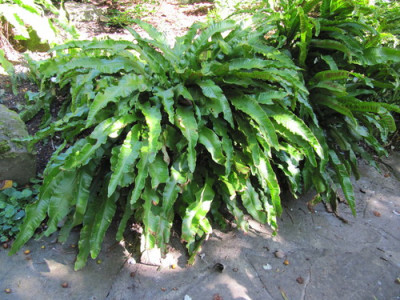
If you’re looking to add timeless greenery to a shaded corner of your garden, Asplenium scolopendrium, also known as the Hart’s-tongue fern, is a perfect choice. This evergreen fern stands out with its smooth, strap-shaped fronds that create a striking contrast to the finely divided foliage of more traditional ferns.
Unlike many ferns that require acidic soil, Asplenium scolopendrium adapts well to neutral or slightly alkaline conditions, which makes it especially valuable for gardens with limestone-rich soil. It thrives in partial to full shade, where direct sunlight will not scorch its glossy green fronds. Consistent moisture is essential, so the soil should remain evenly damp but never waterlogged. Organic mulch helps retain moisture and keeps the roots cool during warmer months.
Propagation of Asplenium scolopendrium works best through division in early spring, which suits beginners. Once established, it requires minimal care beyond occasional watering during dry spells and the removal of damaged fronds to keep the plant tidy.
For companion planting, Alchemilla mollis (lady’s mantle) pairs beautifully with Hart’s-tongue fern. It enjoys similar conditions, partial shade and moist, well-drained soil, and its soft, scalloped leaves and airy chartreuse flowers provide a gentle textural contrast to the fern’s upright, glossy fronds. Together, they create a lush, layered woodland effect.
Another excellent companion is Iris cristata, the dwarf crested iris. This low-growing woodland perennial blooms in early spring with delicate lavender-blue flowers, adding seasonal color before the fern reaches its full presence. Iris cristata thrives in partial shade and humus-rich soil, making it a natural fit alongside Asplenium scolopendrium. Its spreading habit fills gaps at ground level, complementing the fern’s vertical form.
Used beneath trees, along shaded borders, or in rock gardens, this combination offers year-round texture, spring color, and a refined, low-maintenance woodland aesthetic.
Asplenium scolopendrium usually forms a clump about 12 to 18 inches tall and wide. In good conditions, older plants can spread a little more, creating a dense patch of glossy fronds.
This fern prefers soil that stays consistently moist but not waterlogged. It dislikes being too dry, especially in summer, so regular watering or mulching helps keep it healthy.
Yes, Asplenium scolopendrium is hardy and can withstand cold winters in many regions. Once established, it tolerates frost well and survives outdoors without special protection in most temperate gardens.
Asplenium scolopendrium is evergreen. Its shiny, strap-like fronds remain through the winter, although some may look tired by early spring. At that point, you can remove old fronds to make room for fresh new growth.
Last updated on Aug 02, 2026
Species suggested by: Dina Russell, 2020
Plant Profile compiled and written by: Team PlantShare
Contributors: Team PlantShare & Jeffrey Lazar
 Ask Us!