



 Garden The PlantShare Way ®

~ All About Quince ~


The Quince origin traces back to the regions of the Middle East and Central Asia, where the fruit has been cultivated for thousands of years. Known scientifically as Cydonia oblonga, Quince has played an important role in traditional diets and orchards across Europe and Asia. Today, it remains a popular choice among gardeners who want a hardy fruit tree with both ornamental and culinary value.
When planning to grow this tree, understanding the best Quince tree zone is essential. They typically thrive in USDA Zones 5 through 9, where winters are cold enough to meet their chilling requirements and summers provide the warmth needed for fruit development. Gardeners in cooler climates should select a protected spot to avoid late frosts, which can damage early blossoms.
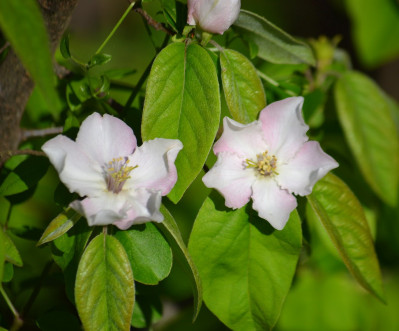
There are several types of Quince available to home gardeners. Some are bred mainly for cooking, producing firm fruit ideal for jams, jellies, and baked desserts. Others are selected for their ornamental qualities, with striking blossoms in spring and a rounded, attractive growth habit. Beyond their usefulness in the kitchen, these trees add charm to landscapes with their fragrant flowers and golden fruit.
Modern growers also enjoy exploring different Quince varieties. Cultivars such as ‘Smyrna’ and ‘Pineapple’ are prized for their unique flavors, while ‘Champion’ is popular for its reliability and abundant yields. Each variety has slightly different growth habits and fruit characteristics, giving gardeners flexibility in choosing the best fit for their climate and cooking needs.
Companion planting can further improve quince tree health and productivity. Borago officinalis, commonly known as borage, is an excellent companion plant for quince trees. Its bright blue, star-shaped flowers attract pollinators such as bees, which helps improve fruit set during flowering. Borage also draws beneficial insects that prey on common orchard pests, creating a more balanced garden ecosystem. Additionally, its deep roots help loosen the soil, and its leaves can be used as a nutrient-rich mulch once the plant finishes flowering.
For beginners, quince trees offer an excellent opportunity to learn about fruit cultivation. They are relatively low-maintenance, adapt well to different soils, and reward patience with a harvest that brings both beauty and flavor to the garden. With the right variety and growing zone, Quinces can become a standout feature in any orchard.
Quinces grow in temperate regions with cold winters and warm summers. They are commonly planted in Europe, the Middle East, Asia, and parts of North America. The trees prefer well-drained soil and do best in USDA Zones 5 to 9.
Quince originated in the Middle East and Central Asia. Over time, the fruit spread into Europe and became a traditional part of orchards in countries like Spain, Turkey, and Greece. Today, quinces are grown in many places around the world with the right climate.
A Cydonia oblonga tree usually grows between 10 and 20 feet tall. With proper pruning, gardeners can keep it smaller for easier care and harvesting. Its rounded shape and spring blossoms also make it an attractive addition to gardens.
Yes, Cydonia oblonga grows best in full sun. It needs at least six hours of direct sunlight daily to produce healthy flowers and fruit. Without enough light, the tree may struggle to bloom and the fruit may stay small or fail to ripen properly.
Last updated on Nov 15, 2026
Species suggested by: Patricia Ross, 2020
Plant Profile compiled and written by: Team PlantShare
Contributors: Team PlantShare
 Ask Us!