



 Garden The PlantShare Way ®
~ All About Fountain grass ~


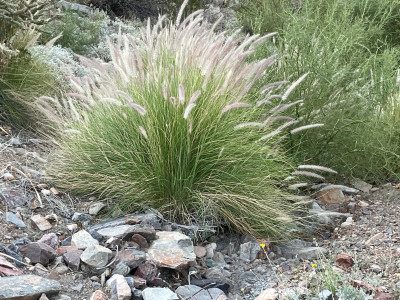
Cenchrus setaceum, commonly known as Purple Fountain Grass, is a striking ornamental grass valued for its graceful, arching foliage and feathery flower spikes. Understanding Cenchrus setaceum care is essential for keeping this plant vibrant and attractive. It thrives in full sun and well-drained soil, tolerating heat and drought once established. Regular watering during dry periods ensures lush growth, but overwatering can lead to root problems. Fertilizing in early spring with a balanced, slow-release fertilizer encourages healthy foliage and abundant blooms.
Pruning is a key part of maintaining the plant’s shape and vigor. Pruning Cenchrus setaceum is best done in late winter or early spring, before new growth begins. Cut back dead or damaged foliage to the ground to allow fresh shoots to emerge. Light maintenance pruning during the growing season can also help remove spent flower spikes and keep the plant tidy.
Pairing Purple Fountain Grass with the right companions enhances garden design. Companion plants include colorful perennials and low-growing flowers that contrast with its upright form and soft texture. Plants like salvias, echinaceas, or ornamental sages provide complementary colors and create dynamic borders, while groundcovers help reduce weeds and retain soil moisture.
Propagation of Cenchrus setaceum is simple and can be done through division or stem cuttings. In early spring, divide mature clumps into smaller sections, ensuring each has roots and shoots, then replant in prepared soil. Stem cuttings can also root easily in a warm, moist environment, allowing gardeners to expand their plantings efficiently.
With proper attention to sunlight, watering, and pruning, Cenchrus setaceum becomes a reliable and visually striking feature in any garden. Its flowing foliage, seasonal blooms, and low-maintenance growth make it ideal for beginners seeking a graceful, long-lasting ornamental grass.
In warm climates (USDA zones 9–11), Purple Fountain Grass is a perennial, meaning it will return year after year. In colder regions, it is often grown as an annual because frost can kill it.
In areas with frost or freezing temperatures, it will not survive winter outdoors. In colder climates, it should be grown in containers that can be brought indoors or treated as an annual. Mulching and covering can offer limited protection, but prolonged freezes will likely damage the plant.
Trimming involves cutting back dead or damaged foliage to keep the plant tidy. Use sharp garden shears and remove stems down to the base. Light trimming during the growing season can remove spent flower spikes.
The best time to cut back Cenchrus setaceum is in late winter or early spring, before new growth starts. This clears out old, brown leaves and allows fresh shoots to emerge for a healthy, attractive plant.
Plant in full sun with well-drained soil. Water regularly during the first growing season, then reduce watering once established. Fertilize in spring with a balanced, slow-release fertilizer. Mulching helps retain soil moisture and controls weeds.
Plant Cenchrus setaceum in spring after the last frost. This gives it time to establish roots before hot summer weather. Container plants can also be started indoors and moved outside once temperatures are safe.
Provide full sun, well-drained soil, and moderate watering. Space plants at least 2–3 feet apart for airflow. Prune old foliage annually, and fertilize lightly during the growing season. For colder climates, grow in pots or treat as an annual.
Last updated on May 31, 2026
Species suggested by: Catherine Ko, 2022
Plant Profile compiled and written by: Team PlantShare
Contributors: Team PlantShare
 Ask Us!