



 Garden The PlantShare Way ®
~ All About Pink jasmine ~


The Pink Jasmine plant (Jasminum polyanthum) is a favorite among gardeners for its rapid growth and intoxicating fragrance. Known for its cascades of star-shaped flowers, Jasminum polyanthum can be grown both outdoors as a vigorous climber or indoors as a charming houseplant. With proper care, it rewards beginners with lush foliage and clouds of blooms each spring.
When growing Pink jasmine, choose a location with bright, indirect sunlight. Outdoors, it thrives on trellises, fences, or pergolas, quickly covering supports with its twining stems. Indoors, provide a sunny window and rotate the pot occasionally for even growth. Good soil drainage and regular watering are essential, though the plant dislikes soggy roots.
Unlike Pink jasmine, Trachelospermum jasminoides (star jasmine) is an evergreen climber with leathery leaves and a more compact growth habit, making it especially popular for year-round coverage on walls and fences in warmer climates.
Jasminum polyanthum pruning is necessary to keep growth in check. After flowering, cut back long, tangled stems to encourage fresh shoots and maintain a tidy shape. Without pruning, the vine can become unruly. Proper trimming also helps improve airflow, reducing the chance of pests.
The Pink jasmine bloom time usually arrives in late winter or early spring, filling the air with fragrance. If you notice your the plant not blooming, the plant may need more light, cooler night temperatures in winter, or a brief resting period with reduced watering.
Basic Jasminum polyanthum care includes feeding with a balanced liquid fertilizer during the active growing season. Repot every two to three years if grown indoors to refresh the soil and give the roots more space.
For those interested in expanding their collection, Jasminum polyanthum propagation is straightforward. Take semi-ripe stem cuttings in summer, root them in moist soil, and keep them warm until established.
While beautiful, note that Jasminum polyanthum toxic concerns exist for pets if ingested. Always place the plant out of reach of cats and dogs. With attention to its needs, this climbing jasmine will provide years of beauty and fragrance.
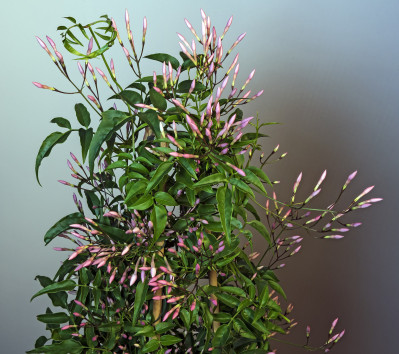
Pink jasmine usually blooms in late winter through early spring. Its buds are deep pink, opening into star-shaped white flowers with a strong fragrance that can last for weeks.
Plant it in well-draining soil and give it bright, indirect sunlight. Outdoors, train it on a trellis, fence, or pergola so it can climb. Indoors, place it near a sunny window. Water regularly but avoid soggy soil, and provide support for the vine to twine around as it grows.
Prune after the flowering season is finished. Cut back long, tangled, or weak stems to encourage new growth and keep the plant compact. Removing old stems also improves airflow and helps the plant stay healthy.
Care is simple: give it consistent moisture during growth, feed it with a balanced liquid fertilizer every few weeks in spring and summer, and allow slightly cooler nights in winter to encourage bud formation. Indoors, rotate the pot so it grows evenly, and repot every two to three years to refresh the soil.
Last updated on May 31, 2026
Species suggested by: Moz Benado, 2023
Plant Profile compiled and written by: Team PlantShare
Contributors: Team PlantShare & Moz Benado
 Ask Us!