



 Garden The PlantShare Way ®

~ All About Corn plant ~


Dracaena fragrans, often called the corn plant, stands out as one of the easiest and most dependable houseplants for beginners. Its tall canes and arching green leaves bring structure and calm to indoor spaces, while its forgiving nature helps new gardeners build confidence.
Proper care for Dracaena fragrans starts with light and water. This plant prefers bright, indirect light but adapts well to medium or even low light. Water only when the top inch of soil dries out, and always empty the saucer after watering. Too much moisture causes more problems than dry soil. A loose, well-draining potting mix supports steady root growth and long-term health.
Many beginners worry about pruning, but the process is simple. Trim tall or leggy stems in spring or early summer to manage height and shape and for a fuller look. New growth usually appears just below the cut and always at a node. Crumble brown leaves and put them back on top of the soil; they are the best organic, slow-release fertilizer you can give your plant. Trim damaged leaves anytime to keep the plant looking tidy, taking care to shape the tip to match undamaged leaves. Yellow leaves are sending nutrients back into the stem as they age so do consider leaving yellow leaves on the plant until they brown.
Dracaena fragrans propagation allows you to expand your plant collection easily. Cut a healthy stem into sections and place them in water or moist soil. Keep the cutting at room temperature and in indirect light. Roots often develop within a few weeks, making propagation beginner-friendly and rewarding.
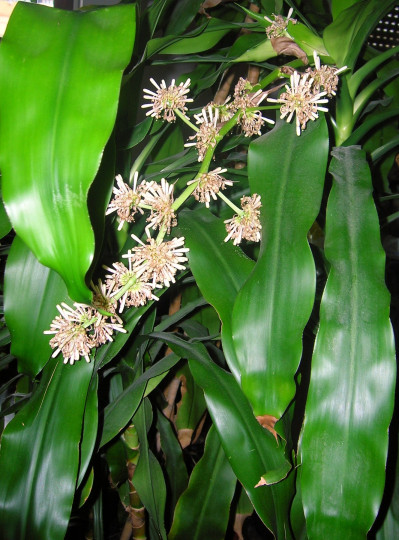
People often ask about plant bloom time. Flowering indoors remains uncommon, but mature plants may bloom in late winter or early spring. The small white flowers release a strong, sweet fragrance, which explains the plant’s name.
Companion plants improve both appearance and care routines. Chlorophytum comosum adds soft, arching leaves that contrast nicely with the upright form of Dracaena fragrans. Dracaena trifasciata provides bold, vertical lines and handles similar light and watering schedules. Grouped together, these plants create a cohesive, low-maintenance indoor display that supports healthy growth and visual balance.
The easiest way to propagate Dracaena fragrans is by stem cuttings. Cut a healthy stem just below a node. Place the cutting in water or moist soil. Keep it in a warm spot with bright, indirect light. Roots usually form in a few weeks. Once roots are strong, plant it in soil.
Dracaena fragrans is a low-maintenance plant. Keep it in a warm room and away from cold drafts. Water only when the top soil feels dry. Wipe the leaves sometimes to remove dust. Trim yellow or damaged leaves to keep the plant looking neat.
This plant grows best in loose, well-draining soil. A standard houseplant mix works well. Adding perlite or sand helps improve drainage. The soil should hold some moisture but never stay wet for long.
Dracaena fragrans prefers bright, indirect light. It can handle lower light, but growth will be slower. Avoid direct sunlight because it can burn the leaves. A spot near a window with filtered light is ideal.
Last updated on May 31, 2026
Species suggested by: Dina Russell, 2026
Plant Profile compiled and written by: Team PlantShare
Contributors: Team PlantShare
 Ask Us!