



 Garden The PlantShare Way ®

~ All About Jack-in-the-pulpit ~


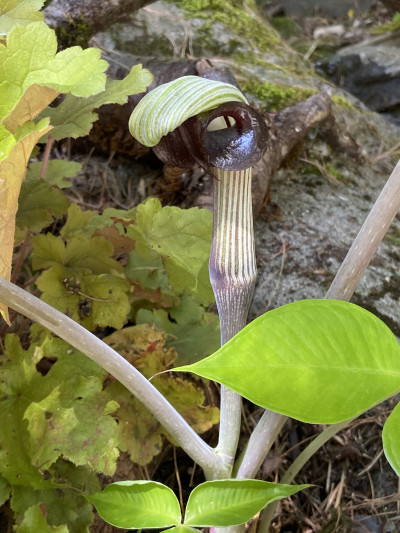
Arisaema triphyllum, commonly known as Jack-in-the-pulpit, is a fascinating woodland perennial native to eastern North America. Its unusual flower consists of a hooded structure called a spathe surrounding a central spadix, giving the plant its distinctive appearance. It grows from a corm and generally prefers cool, shaded garden conditions with moist, well-drained, organic-rich soil.
For beginners, Arisaema triphyllum works especially well in woodland gardens, shaded borders, and naturalized areas. Plant the corm several inches deep in soil that stays consistently moist without becoming waterlogged. A layer of leaf mulch or compost can help maintain moisture and provide the organic matter this woodland plant prefers. Avoid harsh afternoon sun, which can scorch its foliage.
One of the most interesting features of Jack-in-the-pulpit involves its unusual reproductive biology. Individual plants can change their sex as they mature. Smaller plants typically produce mostly or entirely male flowers, while larger, better-established plants may produce both male and female flowers and eventually become predominantly female. This size-dependent sex change makes the species particularly unusual among flowering plants.
Propagation of Arisaema triphyllum can occur through seeds or offsets that develop around the parent corm. After flowering, female plants produce clusters of berries that turn bright red as they mature. Each berry contains several seeds. Fresh seeds can be planted in suitable conditions, although seedlings require several years to reach flowering size.
Trillium ovatum (Western Trillium) is a natural woodland partner for Jack-in-the-pulpit. Its whorl of three broad leaves and white, three-petaled spring flowers, which often age to pink, complement the Arisaema's hooded blooms and similar leaf structure. Both thrive in cool shade with moist, humus-rich soil and are slow to establish, so they suit the same patient, naturalistic planting. Note that Trillium ovatum is native to western North America, while Arisaema triphyllum is eastern, so they would not occur together in the wild.
Arisaema triphyllum is an easy choice for beginners: plant the corm in shade, keep the soil moist and rich, and let it settle in. In the garden, its hooded blooms and bold three-part leaves give shaded corners an exotic woodland look, and red berries add late-season color.
Yes. Arisaema triphyllum, commonly called Jack-in-the-pulpit, is a herbaceous perennial. It grows from an underground corm and returns each spring when growing conditions suit it.
Yes. The above-ground leaves and flower structures naturally die back in fall as the plant enters dormancy. The corm remains underground through winter and produces new growth in spring.
Yes. Arisaema triphyllum grows very well in full to partial shade. It naturally occurs in woodland habitats, where it receives filtered or limited sunlight. Keep the soil consistently moist and rich in organic matter for the best growth.
Yes, wearing gloves is a sensible precaution, especially when handling or cutting the plant. Arisaema triphyllum contains calcium oxalate crystals that can cause significant irritation if plant material is chewed or contacts sensitive tissues. Avoid touching your eyes or mouth while handling it, and wash your hands afterward.
Last updated on Oct 15, 2026
Species suggested by: Dina Russell, 2026
Plant Profile compiled and written by: Team PlantShare
Contributors: Team PlantShare
 Ask Us!