



 Garden The PlantShare Way ®

~ All About Fuyu Persimmon ~


Fuyu Persimmons (Diospyros kaki 'Fuyu') are popular fruit trees known for their sweet, crisp fruit and attractive seasonal foliage. Unlike some other persimmon varieties, Fuyu fruit tastes good while still firm, making it easy to enjoy fresh from the tree. With enough sunlight, suitable soil, and regular maintenance, beginner gardeners can grow a productive tree in a home orchard or large garden.
The typical Fuyu Persimmon hardiness zone is USDA Zones 7 - 10. These trees tolerate moderate winter cold, although young trees need extra protection during severe freezes. Choose a sunny, sheltered location to reduce exposure to strong winds and late frosts. Fuyu Persimmons grow best in areas with warm summers and mild winters.
To plant Fuyu Persimmon tree specimens successfully, select a location with at least 6 - 8 hours of direct sunlight each day. Use well-drained soil and avoid spots where water collects after rain. Dig a hole twice as wide as the root ball but no deeper than its original container. Position the tree at the same soil level, fill the hole, and water thoroughly. Leave enough space around the tree for its mature size, usually 15 - 25 feet tall and wide.
Good tree care starts with consistent watering during the first few growing seasons. Keep the soil evenly moist without allowing it to become waterlogged. Once established, trees tolerate short dry periods but produce better fruit with regular moisture. Apply compost or a balanced fertilizer in spring if the soil lacks nutrients. A layer of mulch helps retain moisture and control weeds, but keep it away from the trunk.
Pruning trees helps create a strong structure and allows sunlight to reach the branches. Prune during winter dormancy, removing dead, damaged, or crossing branches. Maintain several well-spaced main limbs and avoid excessive cutting, which can reduce fruit production.
As a companion plant, Allium sativum, commonly known as Garlic, can grow alongside Fuyu Persimmon trees in a sunny, well-drained garden. Garlic has a compact growth habit, so it can be planted around the outer edge of the tree's root zone without taking up much space. Its strong aroma may help discourage some common garden pests, although it should not be relied on as a substitute for pest management. Both plants prefer well-drained soil, but avoid digging too close to the persimmon trunk or disturbing its shallow feeder roots when planting or harvesting garlic. Leave enough space to prevent competition for water and nutrients, especially while the tree is young.
With proper care, Diospyros kaki 'Fuyu' can provide abundant harvests of sweet fruit in fall and add beauty to the garden throughout the year.
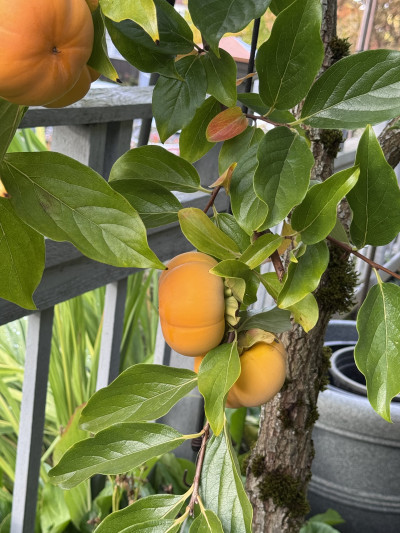
A Fuyu Persimmon is ripe when its skin turns a deep orange color and the fruit feels slightly soft but still firm. Unlike Hachiya persimmons, Fuyu varieties do not need to become very soft before eating. They usually ripen in fall, often from October through December, depending on the climate and growing conditions.
Wash the fruit thoroughly and remove the leafy top. You can eat a Fuyu Persimmon like an apple, including its thin skin. Slice it into wedges or bite into it while firm and ripe. Remove any seeds you find before eating.
Fuyu Persimmons work well in both sweet and savory dishes. Add sliced fruit to salads, oatmeal, yogurt, or breakfast bowls. You can also bake them into cakes, muffins, and quick breads. For a simple dessert, roast persimmon slices with cinnamon or add them to a fruit salad. Their firm texture makes them especially useful in fresh recipes.
Dogs can eat small amounts of ripe Fuyu Persimmon flesh as an occasional treat, but remove the seeds, stem, and leaves first. The seeds and tough plant parts can create choking or digestive problems. Introduce only a small piece and avoid giving your dog large amounts, as the fruit's natural sugars and fiber may upset its stomach. If your dog swallows seeds or develops symptoms, contact a veterinarian.
Fuyu Persimmons can contain seeds, but many commercially grown fruits are seedless. Seed development depends on pollination and the particular variety. If seeds are present, they usually appear in the center of the fruit and should be removed before eating.
Yes. Most Fuyu Persimmon trees can produce fruit without a second tree nearby. However, pollination from another compatible persimmon tree may improve fruit set in some growing conditions. A single Fuyu tree can still provide a good harvest when it receives enough sunlight and proper care.
The main difference is their shape, texture, and ripening requirements. Fuyu Persimmons are squat and round, with firm flesh that you can eat while crisp. Hachiya Persimmons are larger and more like a heart-shaped teardrop, that tastes very astringent until they become completely soft and jelly-like. Both varieties turn orange when ripe, but they require different handling and use in recipes.
Store firm Fuyu Persimmons at room temperature until they reach your preferred ripeness. Once ripe, place them in the refrigerator to slow further softening. Keep them in the crisper drawer or a breathable container, and use them within about one to two weeks for the best quality.
Yes, Fuyu Persimmons freeze well. Wash, dry, peel if desired, and remove any seeds before cutting the fruit into slices or cubes. Spread the pieces on a tray to freeze separately, then transfer them to an airtight freezer bag or container. Frozen persimmons work well in smoothies, sauces, and baked goods. Their texture becomes softer after thawing, so they may not be ideal for fresh salads.
Last updated on Nov 10, 2026
Species suggested by: Dina Russell, 2026
Plant Profile compiled and written by: Team PlantShare
Contributors: Team PlantShare
 Ask Us!