


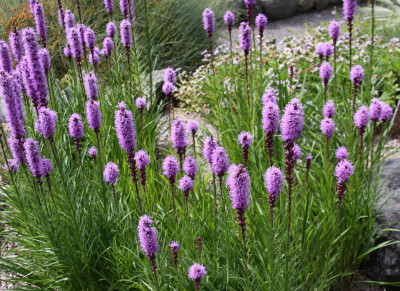
Purple Liatris

 Garden The PlantShare Way ®
~ All About Blazing star ~


The Gayfeather plant, also known as Liatris spicata, is a stunning perennial prized for its tall spikes of purple flowers. Popular in borders, meadows, and cut-flower gardens, this plant combines beauty with relatively low-maintenance care. Understanding proper Gayfeather plant care helps ensure vibrant blooms and healthy growth year after year.
Growing liatris begins with selecting a sunny location with well-draining soil. These plants tolerate a variety of soil types but thrive in fertile, moderately moist conditions. Once established, Liatris spicata perennial plants are drought-tolerant and generally pest-resistant.
One of the key highlights of the plant is its bloom time, which typically occurs from mid to late summer. Tall flower spikes attract pollinators such as butterflies and bees, enhancing both the garden’s beauty and its ecosystem.
Proper Gayfeather pruning involves cutting back spent flower stalks after blooming. This encourages new growth and keeps the garden tidy. In early spring, remove any dead foliage to prepare for the season ahead.
For gardeners wishing to expand their collection, propagation can be done by dividing the bulbs in spring or by starting seeds indoors. Dividing mature plants every few years supports vigorous growth and prevents overcrowding.
Be aware that liatris has invasive tendencies which are minimal, but spacing plants appropriately helps maintain airflow and prevents overcrowding in perennial beds.
With consistent sunlight, well-draining soil, and timely pruning, the Gayfeather plant offers striking vertical accents in any garden. Its long-lasting blooms, pollinator-friendly flowers, and easy plant care make Liatris spicata perennial a reliable and rewarding addition for both beginner and experienced gardeners alike.
Plant Liatris spicata bulbs in the spring after the danger of frost has passed. This allows the roots to establish before the growing season.
Yes, it can spread slowly by underground corms. While not aggressively invasive, spacing is important to prevent overcrowding.
Choose a sunny, well-draining location. Dig a hole for each bulb, place it upright with the pointed end up, and cover with soil. Water lightly to help establish roots.
Liatris typically blooms from mid to late summer, producing tall spikes of purple flowers that attract pollinators.
Yes, Liatris spicata is a perennial. With proper care, it returns each year and can thrive for many seasons.
Plant bulbs about 1–2 inches deep, ensuring the pointed tip faces upward. Cover with soil and water gently.
Good companions include coneflowers, black-eyed Susans, ornamental grasses, and coreopsis. These plants enjoy similar sunlight and soil conditions.
Provide full sun, well-draining soil, and moderate watering. Remove spent flower spikes to encourage further growth, and divide clumps every few years to maintain vigor. Fertilize lightly in spring if soil is poor.
Last updated on May 31, 2026
Species suggested by: Dina Russell, 2020
Plant Profile compiled and written by: Team PlantShare
Contributors: Team PlantShare
 Ask Us!

