




 Garden The PlantShare Way ®

~ All About Lilyturf ~


Liriope (Liriope muscari) is a reliable, low-maintenance plant that works well in many landscapes, especially where grass struggles. Used widely as Liriope muscari ground cover, it forms dense clumps of narrow, arching leaves that help suppress weeds and define garden edges with little effort. A related species, Liriope spicata, spreads more aggressively by underground runners and is often chosen for large areas where fast coverage is needed, making it especially effective for erosion control on slopes.
Success begins with planting Liriope muscari in the right location. This plant adapts well to full sun or partial shade, though it grows fullest with some protection from strong afternoon sun. Liriope muscari prefers well-drained soil but tolerates clay and slightly dry conditions once established. Plant it at the same depth as the nursery container and space plants far enough apart to allow clumps to fill in naturally.
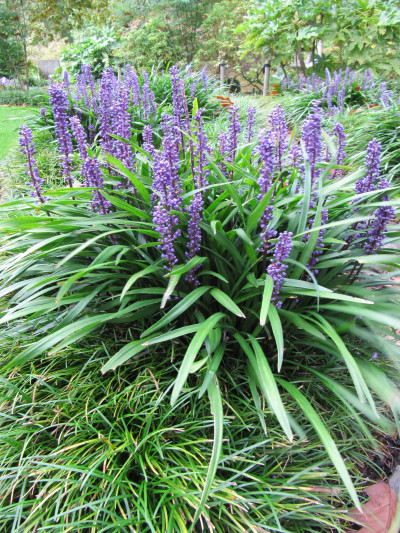
One major benefit of Liriope is its year-round appearance. Many gardeners value evergreen Liriope because the foliage stays green through winter in mild climates, adding structure when other plants fade. In late summer to early fall, plants send up short flower spikes. This bloom time brings small purple or lavender flowers, followed by dark berries that add seasonal interest.
Ongoing plant care stays simple. Water regularly during the first growing season, then reduce watering once roots establish. Trimming old foliage in early spring refreshes the plant and allows new growth to emerge cleanly. Fertilizer rarely becomes necessary in average garden soil.
Over time, clumps may grow thick and crowded. Transplantation of Liriope muscari works best in spring, when plants recover quickly. This also creates an easy opportunity for propagation. Divide mature clumps with a sharp spade and replant sections immediately.
With its adaptability, tidy form, and minimal upkeep, Liriope remains a dependable choice for borders, slopes, and shaded areas where other ground covers fail.
Liriope muscari blooms in late summer to early fall. It produces short spikes of purple or lavender flowers above the leaves.
Yes, it spreads slowly by forming larger clumps. It does not usually spread aggressively like running ground covers.
Trim liriope by cutting the leaves back close to the ground with shears or a trimmer. Remove only the old foliage.
Plant it in spring or early fall. These seasons give the roots time to settle before heat or cold stress.
Yes, it grows well in partial shade and even full shade. It may bloom more in areas with some sunlight.
Space plants about 12 to 18 inches apart. This spacing allows clumps to fill in without crowding.
Cut it back in late winter or very early spring, before new growth starts.
Divide liriope in spring. This helps control size and keeps plants healthy.
The best time to transplant is spring. The plant recovers faster during this season.
Prune it in late winter or early spring. This removes damaged leaves and makes room for fresh growth.
It grows at a moderate rate. Clumps slowly expand over a few years rather than spreading quickly.
Last updated on May 31, 2026
Species suggested by: Dina Russell, 2020
Plant Profile compiled and written by: Team PlantShare
Contributors: Team PlantShare
 Ask Us!