


Love to Create a Bog or Water Garden? Read on!
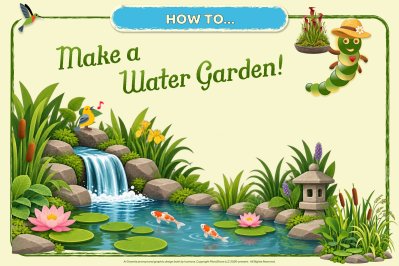
AI Grannie prompt and graphic design are both by humans. Copyright PlantShare LLC 2026-present. All Rights Reserved.
If you love plants and want to try something new, a water garden might be your next favorite project. Water gardens bring movement, sound, and a whole new layer of life to your backyard. You can build a space that feels calm, natural, and alive with plants and maybe even fish.
In this guide, we will walk you through everything you need to know about creating a water garden, from planning to planting. You will also find real tips from Dr. Plant™, The Lazy Gardener, our founder, who built her own water garden at home.
First, Choose a Water Garden Design
When designing a water garden, think about how you will use the space and how you want to experience it. Do you want a quiet spot to relax? A home for fish or a place to grow plants like lotus and water lilies? Special features, such as waterfalls, bubbling springs, or streams, add movement and sound, which can make your garden feel more alive.

Figure 1: Approach to the upper basin and waterfall invites a peaceful meander through a bamboo forest and ends with a sitting rock perfect for lunch or a break during a hot day.
There are many water garden designs to choose from, and the right one depends on your space, budget, and how much time you want to spend on maintenance. Here are a few popular styles:
- Free-standing water gardens: These are the lowest cost, lowest maintenance and the fastest to create. Perfect for small spaces like balconies or patios. These are great options if you want easier access i.e., less bending when you tend to your plants.
- Fountains: A simple fountain may be just enough to add dimension and calm to your space, especially on a hot balcony or patio.
- Bog containers are a special type of water garden - If you love carnivorous plants, hang tight for this upcoming “How to…” series!
- Container water gardens: You just need a large pot or half barrel with no drainage holes. Adding a bubbler with a small pump will add sound to this option.
- In-ground ponds & streams: While more expensive up front, they are long-lasting and easy to maintain if installed properly. They are more natural-looking and offer habitat for all kinds of wildlife, including plants, birds, insects, fish and other animals.
DIY Water Gardens on a Budget
You don't need a huge budget to start your own water garden. DIY water garden is a great option if you want to keep costs low while still creating something beautiful.
A simple, free-standing container water garden can be built in a single afternoon using a large pot, some aquatic plants, such as water lilies, lotus, Sarracenia rubra, or Pontederia cordata (Pickerel weed), and a few rocks. A decorative container – an old teapot or pot with a chipped rim – is a creative option that saves money.
And don’t forget easy-to-install water features, like a fountain that hangs on a wall!


Figure 2: A water fountain, in the shape of a lion’s head, makes a small space outside a guest room peaceful and cool in the heat of the summer.
Ideas for a Water Garden That Feels Natural
The biggest trick to a beautiful water feature is to make it look as natural as possible. A water garden that mimics nature will always look better and feel more relaxing than one that looks artificial or overly designed.
Dina Russell, Dr. Plant™, built a water garden in her own backyard with this goal in mind. She used different kinds of stones, bamboo enclosures, and a wide variety of plants to give the space a natural, organic feel. She added two small waterfalls so she could enjoy the sound of running water while relaxing outside. To create the pool itself, she used rebar and cement, giving her a durable base that has lasted for decades.
She said, “A family of Chickadees and Golden Crown and Ruby Crown Kinglets bath twice daily in the lower waterfall just above the deep ‘pool’. The Chickadees take long baths, happily splashing water everywhere. They even hop onto the slope of the waterfalls; sometimes they slide right off! Kinglets are very fast, agile fliers with a high zee zee zee call. They favor speed bathing: landing at the top of the lower waterfall, flipping and swishing their wings, flapping and washing their tails, then they turn and quickly flit away.“


Figure 3: Water cascades from the wide, lower waterfall (left) into the deep, lowest basin (right). This deep ‘pool’ borders a stone patio and is a favorite bathing spot for Golden-crowned Kinglets, Chickadees and Robins. Raccoons love to play and wash their food in the shallow basins between the two waterfalls.
Click to see our latest visitors. It's fun!
Here are some ideas for a water garden that will help you achieve a similar natural look:
- Use natural stones and rocks around the edges to hide any hard lines or plastic liners.
- Add bamboo or tall grasses near the water to create privacy, texture and interest.
- Include a small waterfall or fountain for gentle sound and water circulation.
- Mix different plant heights, some floating, some submerged, and some along the edges.
- Disrupt perfectly straight lines or symmetrical shapes. Nature rarely looks that neat.
The more your water garden resembles a natural pond or stream, the more inviting it will feel and the more calming it will be.
Steps for Creating an ‘in-ground’ Water Garden
Now let's talk about the actual process of creating a water garden in your yard.
- Choose your location. Pick a spot that gets at least four to six hours of sunlight a day. Most aquatic plants need sunlight to thrive, but too much direct sun will encourage algal growth.
- Decide on the size and shape. Mark out the area with a hose or rope so you can see how it will look before you dig.
- Dig and prepare the base. If you are building an in-ground pond, dig past your desired final depth to account for the structure itself. If you are using a liner, remove any sharp rocks or roots that could damage it over time.
- Consider including a waterfall or fountain (optional). While not required, these features add movement, sound, and better oxygen flow for fish and plants. Light reflects off moving water, which adds a dimension as well.
- Lay out and test the water pump and pipes. Be sure that the pipe joints are tight and that your layout allows for maintenance. Choose a pump that has more power than you need so it is not always running at top speed.
- Install lighting (optional). Lighting in and around your water feature allows you to enjoy your pond at night as well as during the day.
- Insert your liner or build with cement. You can use a flexible pond liner, a preformed shell, or cement as Dina Russell did for a more permanent structure.
- Add rocks and stones. Place these around the edges to hide the liner, soften the edges to create a natural transition between the water and your yard.
- Fill with water and let it settle. Before adding plants or fish, turn on the pump to fully oxygenate the water and add a de-chlorinating agent. Lack of oxygen and chlorine in tap water may harm plants and fish.
- Add your plants. Arrange a balanced mix of floating, marginal, and submerged plants. Timing matters here too, so take a look at our seasonal planting guide to know the best time to add plants in your area.
Whichever route you choose – water feature, free-standing container or in-ground water garden – remember that your water garden does not need to be perfect right away. It will grow and change as your plants establish themselves and fill in the space.
How PlantShare Can Help
If you want more guidance as you build your water garden, PlantShare is here to help. On our platform, you can browse plant care guides, connect with other plant lovers, and get answers to your gardening questions. You can also book a one-on-one consultation with our founder, Dina Russell, for personalized advice on your water garden or any other type of garden project.
FAQ
How to make a mini water garden?
You can make a mini water garden using a large container, half barrel, or even a big bowl as long as it has no drainage holes. Fill it with water, add a few small aquatic plants like dwarf water lilies or floating ferns, and place it in a sunny spot on your patio or balcony.
How deep does a water garden need to be?
Most water gardens need to be at least 18 to 24 inches deep to support plants and fish through changing seasons. If you plan to keep fish through the winter, a depth of 24 to 36 inches is safer in colder climates. Not sure how cold your area gets? Check out our guide on plant hardiness zones to see what to expect where you live.
What kind of plants can I put in a fish pond?
Water Lilies, Lotus, Anacharis, Hornwort, and Water Hyacinth all work well in a fish pond. These plants provide shade, oxygen, and shelter for your fish and keep the water composition balanced.
What is the ideal water temperature for a water garden?
Most aquatic plants and fish do best in water temperatures between 65 and 75 degrees Fahrenheit. Extreme heat or cold can stress your fish and slow down plant growth, so try to place your water garden somewhere with partial shade during the hottest part of the day.