



 Garden The PlantShare Way ®
~ All About Texas sage ~


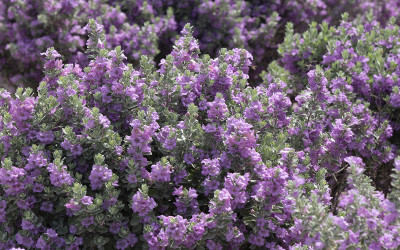
Texas sage (Leucophyllum frutescens) is a hardy, drought-tolerant shrub that thrives in hot, dry climates. Known for its silvery foliage and bursts of purple, pink, or white flowers, it’s a favorite in low-maintenance landscapes. There are several Texas sage varieties, including ‘Green Cloud,’ ‘Silverado,’ and ‘Compacta,’ each with unique size and bloom characteristics. Understanding the types of Texas sage helps you choose the best fit for your garden design.
The best time to plant it is in spring or early fall. Planting during these seasons allows roots to establish before extreme summer heat or winter cold. Following proper planting instructions is key: choose a sunny location with well-draining soil, dig a hole twice as wide as the root ball, and water deeply after planting.
Texas sage care is simple. It thrives on neglect, needing little water once established. Overwatering can cause root rot, so let the soil dry between waterings. Fertilizing is rarely needed, as the plant performs well in nutrient-poor soils.
For shaping and encouraging dense growth, Texas ranger plant pruning should be done in late winter or early spring before new growth begins. Light trimming after blooming can help maintain form without reducing flower production.
The propagation of Texas sage bushes is most successful through semi-hardwood cuttings taken in summer. Place cuttings in a sandy, well-draining mix, keep them moist, and provide bright but indirect light until roots develop.
Texas sage pairs well with other heat- and drought-tolerant plants that share similar soil and water needs. Euphorbia milii makes an excellent companion, adding contrast with its thorny stems, glossy leaves, and long-lasting red, pink, or yellow blooms. Its upright form and extended flowering season complement the softer texture and sporadic blooms of Texas sage. Another strong companion is Hesperaloe parviflora, commonly known as red yucca. Its arching, strap-like leaves and tall spikes of coral-red flowers add vertical interest and attract hummingbirds, enhancing the overall desert-style planting.
With its resilience, beauty, and low upkeep, Texas sage is ideal for water-wise gardens. By selecting the right varieties and following proper planting and care steps, you can enjoy a landscape filled with color and texture while keeping maintenance to a minimum.
Last updated on May 31, 2026
Species suggested by: Catherine Ko, 2023
Plant Profile compiled and written by: Team PlantShare
Contributors: Team PlantShare
 Ask Us!

