



 Garden The PlantShare Way ®

~ All About Cucumber ~


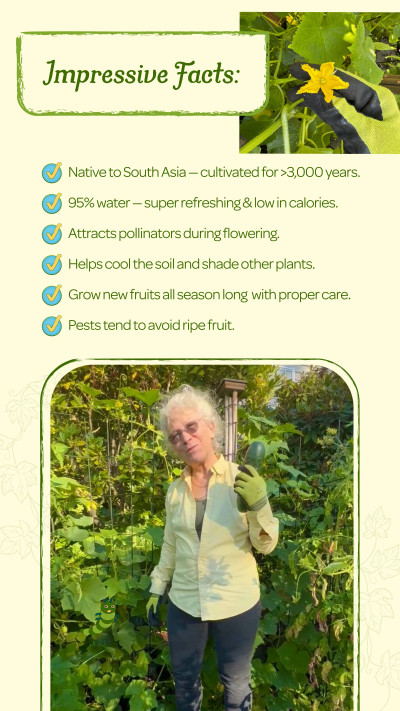
The origin of cucumber goes back thousands of years to South Asia, where this refreshing vegetable first thrived in the foothills of the Himalayas. From there, it spread to ancient civilizations such as Egypt, Greece, and Rome, valued for its cooling qualities and adaptability. Today, cucumbers are grown worldwide and remain a favorite crop for beginners thanks to their ease of cultivation, high productivity, and versatility.
Among the most fascinating cucumber facts is that the plant belongs to the gourd family, making it a close relative of melons and pumpkins. Its scientific name is Cucumis sativus, and it grows vigorously in warm conditions with steady watering. Because cucumbers are composed of more than 95% water, they refresh and hydrate, making them especially popular in summer gardens.
When it comes to uses of Cucumis sativus, the possibilities go far beyond the salad bowl. Cucumbers are enjoyed fresh, pickled, or blended into drinks. Traditional remedies have long relied on them for soothing irritated skin and reducing puffiness, while modern skincare products frequently feature cucumber extracts for their cooling and hydrating effects. Gardeners also appreciate cucumbers in companion planting, where their vines help shade soil and reduce weed growth.
Caring for cucumbers is straightforward if you follow a few essential steps. Plant them in full sun with rich, well-draining soil, and keep the soil consistently moist - dry spells can cause bitterness. Trellising the vines improves air circulation, saves space, and keeps the fruits clean. Regular harvesting encourages more production, while mulching around the base helps retain moisture and regulate soil temperature.
Cucumbers also benefit from thoughtful companion planting. Origanum vulgare (oregano) works well nearby as a low-growing herb that suppresses weeds and attracts beneficial pollinators, helping improve overall garden health. Coriandrum sativum (coriander or cilantro) is another excellent companion, as its flowers attract predatory insects that help control aphids and other cucumber pests. Both herbs thrive in similar growing conditions and enhance biodiversity without competing heavily for nutrients.
By understanding proper care, exploring unique cucumber facts, learning about its uses, and pairing it with supportive companion plants, gardeners can enjoy a crop that has nourished and benefited people for centuries.
Yes, Cucumis sativus can grow well in pots or containers if you give the plant the right setup. Pick a container that is at least 12 inches deep and wide, so the roots have space to spread. Use loose, well-draining potting soil, and place the pot where it will get 6–8 hours of direct sunlight each day.
Cucumbers grown in containers need steady watering because soil in pots dries faster than in the ground. Check the soil often, and water when the top inch feels dry. Adding mulch on top helps hold in moisture. Since cucumbers naturally climb, it’s best to place a small trellis or stake in the pot. This keeps the vines off the soil, saves space, and makes harvesting easier.
A cucumber is the fruit of the plant Cucumis sativus. Even though we eat it like a vegetable, it develops from the flower of the plant and contains seeds, which makes it a fruit in botanical terms.
Cucumbers need steady moisture to grow well. Water them deeply about 2–3 times a week, depending on your soil and weather. Hot, dry days may require more frequent watering. Aim to keep the soil evenly moist but not soggy.
Bitterness usually comes from stress on the plant. Common causes are irregular watering, very hot temperatures, or poor soil conditions. Stress triggers natural compounds called cucurbitacins, which give cucumbers a bitter taste. Keeping the soil moist, adding mulch, and picking fruit regularly can reduce bitterness.
Last updated on Jul 29, 2026
Species suggested by: Dina Russell, 2025
Plant Profile compiled and written by: Team PlantShare
Contributors: Team PlantShare & Dina Russell
 Ask Us!