


10 Houseplants That Are Easy to Grow
PlantShare LLC, copyright 2026-present. All Rights Reserved.
Indoor plants can brighten your home, improve air quality, and help you feel more connected to nature. You do not need advanced skills to enjoy healthy greenery indoors! You do need to learn basic observational skills and how to check for 4 core growing conditions common to all plants: light, water, fertilizer and exposure.
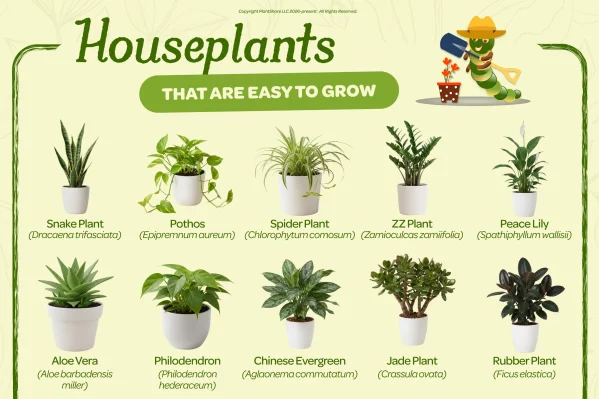
In this guide, we listed 10 beginner-friendly plants that grow well inside most homes. These options are perfect for anyone looking for easy-to-grow plants while learning basic plant care skills.
Why Start With Easy Houseplants?
Starting with low-maintenance plants helps you build confidence.
Houseplants that are easy to grow thrive with basic care and minimal attention. So-called ‘easy houseplants’, tolerate small mistakes with watering, sunlight, and humidity. This is why they are an ideal starting point for beginners and fabulous for people who travel a lot.
Before choosing plants, keep these simple indoor gardening tips in mind:
- Most indoor plants prefer soil temperatures between 65°F and 75°F;
- Keep plants away from cold drafts, heating vents and hot windows;
- Use pots with drainage holes to prevent ‘root rot’, the result of drowning;
- Check your USDA hardiness zone if you plan to move plants outdoors seasonally;
- Most common houseplants grow best indoors in all US hardiness zones because indoor temperatures are constant.
1. Snake Plant (Dracaena trifasciata)
The Snake Plant is one of the most popular houseplants that is easy to grow, especially for beginners. A popular cultivar features upright sword-like leaves with green and yellow patterns that fit well in modern homes, apartments, and offices. And there are as many as 14 variations in leaf color and shape, or ‘varieties’, to choose from!
LIGHT: This plant survives in low light, but it thrives in bright, ‘indirect sunlight.’ A window with late afternoon or early morning both work as long as the light is indirect, i.e. not shining down directly onto the leaves. If the leaf feels hot to the touch or is burning (turning brown, especially at the tips), just move it to a different window. Check leaf temperature and signs of new burns again in a week or so to see if the plant is happier there.
WATER: Snake Plants make this list also because it needs little water: only need to water when the soil becomes fully dry. Overwatering is the most common issue with this plant – dry soil is far better than soggy soil.
EXPOSURE: Snake Plants also tolerate dry indoor air which is a common issue for both humans and plants during winter months. Plants also like soil temperatures between 65°F and 80°F, just exactly what indoor environments provide.
Benefits of Snake Plant include:
- Low-maintenance care
- Air-purifying qualities
- Strong tolerance to neglect
Check out more information about Dracaena trifasciata here. Visit our YouTube channel: how to rescue and an experiment in propagating Snake Plant coming soon!
2. Pothos (Epipremnum aureum)
Pothos is a fast-growing plant with heart-shaped leaves that come in different shades of green, yellow and white. Many beginner gardeners choose pothos because it adapts easily to different lighting conditions and continues growing even with minimal care. Although it grows on trees, i.e. it is an ‘epiphyte’, it also does well as a trailing plant in container gardens and home settings.
WELLNESS: As a trailing plant, it provides ’soft attention’ which is an instant wellness pick-me-up because it breaks up the harsh lines of shelves and desks known to cause stress in humans and simply because it is green. It has proven benefits to air quality in indoor spaces, see more below.
LIGHT: Pothos grows well in bright indirect light, but it also survives in lower-light areas.
WATER: Only water Pothos when the top inch of soil feels dry. The plant enjoys loose, well-draining potting soil and indoor temperatures around 70°F. Pothos can also grow in water for long periods, which makes propagation simple for beginners.
EXPOSURE: As in many plants, environmental stress causes ancient remnants of viruses in the plant genome to ‘jump’. When the virus fragment jumps into a pigment genes, it breaks that gene and the cells then change color. So if you stress your Pothos (maybe you went on a trip and your spouse forgot to water it or your kid poured coffee on the plant instead of in your coffee cup), change your mindset from failure to fun: just propagate the new look!
Many plant lovers enjoy Pothos because:
- Grows quickly indoors
- Easy to propagate – create your own varieties!
- Tolerates occasional lack of water
- Great in small spaces
3. Spider Plant (Chlorophytum comosum)
Spider Plants are long-lived, classic indoor plants from hanging baskets. They have long, arching green and white striped leaves and make small plants called ‘offshoots’ that grow from hanging stems that look like spiders hanging from a silk thread. They are one of the best choices for people searching for a basic houseplant that requires little experience.
LIGHT: Spider Plants grow best in bright indirect light and moderate indoor temperatures. They enjoy soil temperatures around 65°F to 75°F and adapt well to most indoor environments.
WATER: This plant likes slightly moist soil but dislikes standing water. Brown leaf tips signal that the air is too dry or the water contains too many minerals, i.e. is ‘hard’ water. If the water is too hard, you will see white crystals encrusting the pot or soil surface. Filtered water and a change of soil and a new pot will do the trick.
Spider Plants are popular because they:
- Grow quickly
- Are pet-friendly
- Produce ‘spiders’ that are fun to propagate and share with friends
- Improve indoor air quality offering oxygen and removing CO2
Visit the Plant Profile for Chlorophytum comosum for practical tips.
Watch our how-to video demonstrating repotting and stay tuned for our upcoming blog for a real-life story about Spider Plant!
4. ZZ Plant (Zamioculcas zamiifolia)
The ZZ plant is famous for its glossy dark green leaves and impressive ability to survive neglect. It is one of the best houseplants that are easy to grow for busy people or beginners who forget to water their plants.
WATER: This plant stores water inside thick underground rhizomes, which means it can survive dry conditions for long periods. You only need to water it every few weeks depending on indoor humidity and temperature.
LIGHT: ZZ plants tolerate low light extremely well, although they grow faster in medium indirect sunlight. They thrive in normal indoor temperatures and prefer well-draining soil to prevent root rot.
Reasons why beginners love ZZ plants:
- Very low watering needs
- Thrives in low-light rooms
- Resistant to many common plant problems
- Attractive glossy foliage
5. Peace Lily (Spathiphyllum wallisii)
Peace lilies are beautiful indoor plants known for their dark green leaves and elegant white flowers.
WATER: They are excellent for beginners because they clearly show when they need water. Their leaves droop slightly when thirsty, then recover quickly after watering.
LIGHT: This plant grows best in medium or bright indirect light and prefers consistent indoor temperatures around 70°F. Peace lilies enjoy lightly moist soil but should never sit in overly wet conditions.
WELLNESS: Regular contact with plants like Peace Lilies is linked to lower stress levels, better sleep, and a more positive emotional state throughout the day.
6. Aloe Vera (formerly known as Aloe barbadensis miller)
Aloe vera is both decorative and useful. Its thick green leaves contain a gel that many people use for minor skin care needs, especially sunburn. This succulent is one of the easiest indoor plants to keep alive because it requires very little water and tolerates neglect well.
LIGHT: Aloe vera loves bright sunlight and grows best near sunny windows with afternoon sun. It needs soil with excellent drainage, often sold as ‘cactus or succulent soil’.
WATER: Like most succulents, Aloe vera dislikes overwatering and performs better when the soil dries fully between watering sessions. You can tell if it needs water if the leaves look wrinkled, are soft to the touch, not plump or ‘turgid’.
ENVIRONMENT: The plant grows best when indoor soil temperatures are warm, especially above 65°F. Aloe vera is a great option for beginner gardeners who want low-maintenance greenery with practical benefits.
Why people choose Aloe vera:
- Minimal watering requirements
- Compact indoor growth
- Attractive succulent appearance
- Useful gel inside the leaves
7. Philodendron (Philodendron hederaceum)
Philodendrons are some of the most reliable plants to grow inside. Their trailing vines and rich green leaves create a lush tropical appearance that fits almost any indoor space.
LIGHT: This plant adapts well to indoor conditions and grows steadily in medium or bright indirect light. Philodendrons also tolerate lower light levels better than many tropical plants.
WATER: You should water the plant when the top layer of soil feels dry. Philodendrons prefer warm temperatures and moderate humidity, although they can still thrive in standard indoor conditions.
Many beginners enjoy philodendrons because:
- They grow quickly
- They are easy to maintain
- They adapt well to indoor conditions
- They create a full tropical look
8. Chinese Evergreen (Aglaonema commutatum)
Chinese Evergreen plants are known for their colorful patterned leaves or ‘varigations’ and easy-care. They are easy to repot and to propagate.
LIGHT: These plants tolerate low light very well, making them perfect for rooms that do not receive much sunlight.
WATER: Many beginner plant owners appreciate how forgiving this plant can be. Even with occasional missed watering, Chinese evergreen plants often continue growing without major problems.
ENVIRONMENT: This plant grows slowly, which means it stays manageable and requires less frequent repotting. Chinese Evergreen prefers stable indoor temperatures above 60°F and lightly moist soil.
Popular benefits include:
- Beautiful leaf patterns
- Low-light tolerance
- Slow manageable growth
- Easy maintenance
9. Jade Plant (Crassula ovata)
The Jade Plant is a popular succulent with thick shiny leaves and a tree-like appearance. Many people consider it a symbol of luck and prosperity, which adds to its popularity as a houseplant. In California, it is often used as a wedding plant because of its long life and symbolism: when the plant is happy, so is the marriage!
LIGHT: Place them near a sunny window where they can receive several hours of light daily - afternoon sun is great!
WATER: Jade plants require very little water. Allow the soil to dry completely between waterings.
ENVIRONMENT: This plant grows slowly and longlived. Jade Plants prefer warm indoor temperatures and dry conditions, which makes them easy to maintain in many homes. Jade Plant will slough leaves in cold temperatures. You can see this as a problem or an opportunity; that you’ve lost your plant or that you now have a lot more of them! First, the mother plant will recover if protected from frost, often sprouting new branches. Second, the leaves that fell off will root when laid on moist ground and voilá, you’ll have a new Jade Plant for everyone in your neighborhood!
Reasons to grow jade plants:
- Long lifespan
- Low watering needs
- Compact growth habit
- Decorative appearance with white flowers and trailing branches
As an alternative, consider Crassula schmidtii, also perfect to grow indoors or out.
10. Rubber Plant (Ficus elastica)
Rubber Plants are very attractive indoor trees, a bold statement in any room. Their glossy leaves sport wavy-margins and a lush feel and cultivars that offer leaves with white margins and pink/red highlights add interest and are very popular. While slightly larger than some beginner plants, they are easy to care for when in the right location.
LIGHT: This plant grows best in bright indirect light and stable indoor temperatures between 65°F and 80°F. Water when the top layer of soil becomes dry, but avoid soaking the roots.
Rubber Plants can reach 4-8’ feet tall indoors, ideal for filling empty corners or adding greenery to larger rooms. Cleaning the leaves occasionally – yes, you can take it into the shower! – helps the plant absorb light more effectively.
Benefits of rubber plants include:
- Fast indoor growth
- Large decorative leaves
- Easy pruning, braiding and shaping
- Strong indoor adaptability
Simple Tips for Growing Healthy Indoor Plants
Even the easiest indoor plants need basic care to keep them alive. Follow these simple habits to help your plants stay healthy:
Light = location, location, location: Plants require specific intensity, duration and quality of light. There is a lot to unpack here, but in a nutshell where the plant grows in the wild – and all houseplants do grow somewhere in the wild – tells you what they need in your home.
Water appropriately: Don’t be fooled: wilted leaves do not always mean that your plant needs water, it can mean that your plant is drowning. Roots need oxygen so too much water drowns the plant unless they grow naturally in bogs or underwater. A second symptom of drowning is ‘root rot. Check the soil to tell the difference.
Use quality potting soil: Indoor plants grow better in loose, well-draining soil with a relatively high nutrient content. Better soil is worth the expense for all container gardens, inside or out.
Maintain stable temperatures: Most houseplants grow best between 65°F and 75°F.
Keep up humidity in winter: All tropical plants enjoy extra humidity during dry winter months; just like you! Steam heat and fluctuations in temperature dry the air and moisture retained in furniture, curtains and carpet runs out as winter progresses. As humidity declines, dust flies and your nose dries! Both you and your houseplants will benefit from humidity between about 30-45%.
Why Indoor Gardening Is Growing in Popularity
More people around the world are discovering the benefits of indoor gardening. Interest in gardening grew significantly during the COVID-19 pandemic as people spent more time at home and looked for productive, relaxing hobbies. According to the National Gardening Association, 42% of survey respondents reported increasing their gardening activities because of the pandemic. Research also shows that gardening participation remained strong after the pandemic, with millions of households continuing to grow plants, flowers, herbs, and vegetables.
Visually, houseplants add greatly to indoor aesthetics, complementing the sharper edges of home decor such as bookshelves and furniture. The colors and color combinations that plants offer might look garish on a couch, but sing when on a leaf. Adding dynamic greenery that moves and changes over time not only adds life to your home, but also makes your indoor spaces feel more peaceful, comfortable, and connected to nature.
In addition to these passive benefits, the activity of indoor gardening supports wellness and mental health by reducing stress, creating a calming environment and improving an otherwise stale indoor environment all year long. Many people find that watering plants, pruning leaves, and watching a new leaf unfold or a flower open helps them relax during or after busy days. Caring for another person can be stressful, but many find that caring for plants actually reduces stress and anxiety.
Easy-to-grow plants such as the 10 we list here, require little equipment or experience and do well with neglect. If you need some help with plant selection, plant care or container design from an expert, talk to Dr. Plant, Lazy Gardener, Dina Russell and she will share plant care methods, design options for your space.
Even one healthy plant can make you and your home feel more welcome, centered and alive.
Exchange Houseplants on the PlantShare Bulletin Board
PlantShare is a growing community for plant lovers, beginner gardeners, and indoor gardening enthusiasts. Our mission is to encourage sustainable gardening, eco-friendly living, and stronger local communities through the shared love of plants. We believe homegrown plants are an underused natural resource that can help people live greener and more connected lives.
We encourage people to trade, share or exchange plants responsibly via meetups arranged directly on our platform. PlantShare helps connect nearby plant lovers so they can exchange home-grown plants, cuttings, and gardening knowledge in person. Hyperlocal meetups build community while also helping to reduce unnecessary shipping, use of energy and plastic waste.
Eudaemonism,
Plants are already the glue of social congress, the perfect gift or introduction. What do you take to a potluck or give on a special occasion? It’s a salad or wine, a bouquet of flowers, right? And even more than receiving, giving makes us feel great! At PlantShare, we know even small actions matter so knock on that door, offer a plant; there may be a plant buddy, new ‘bestie’ just across the hall!
FAQ
What is the easiest plant to grow?
The Snake Plant is often considered the easiest plant to grow indoors. It tolerates low light, dry air, and infrequent watering.
What plant does not need water?
No plant can survive without water forever, but ZZ plants and Snake Plants need very little water compared to most houseplants.
How to grow healthy houseplants?
Find the right location or ‘microclimate’, avoid overwatering, maintain stable indoor temperatures, and definitely choose high-quality, well-draining soil. Regularly inspect plants for nutrient deficiencies or pests.
What plants grow the fastest indoors?
Pothos, Spider Plants, and Philodendrons are among the fastest-growing indoor plants when placed in bright indirect light.
***
REFERENCES
Pothos (Epipremnum aureum) - “The plant can remove indoor pollutants such as formaldehyde, trichloroethene, toluene, xylene, and benzene in controlled circumstances (e.g. a sealed room).[15] A study found that this effect declined as the molecular weight of the polluting substance increased.[16]"